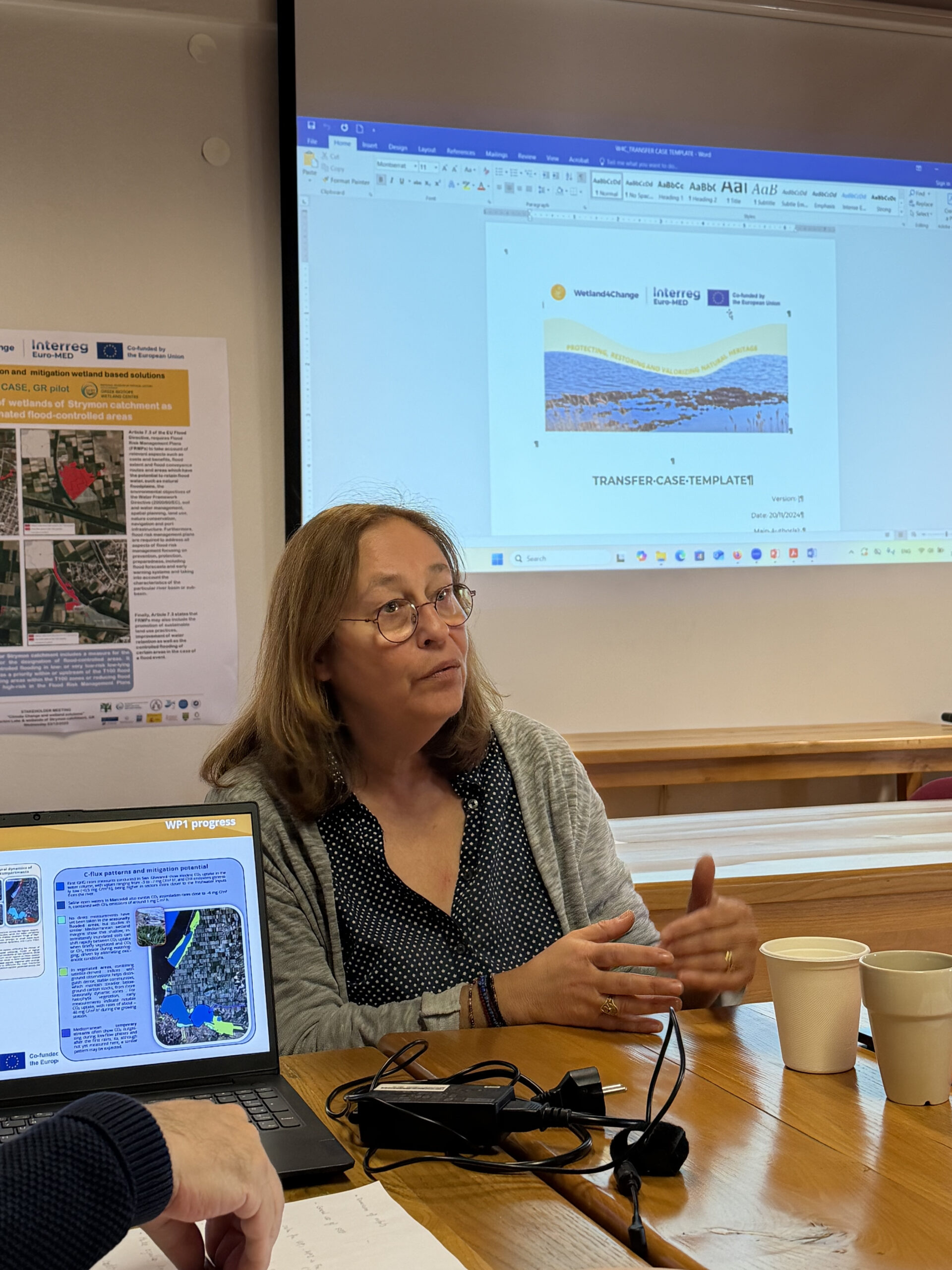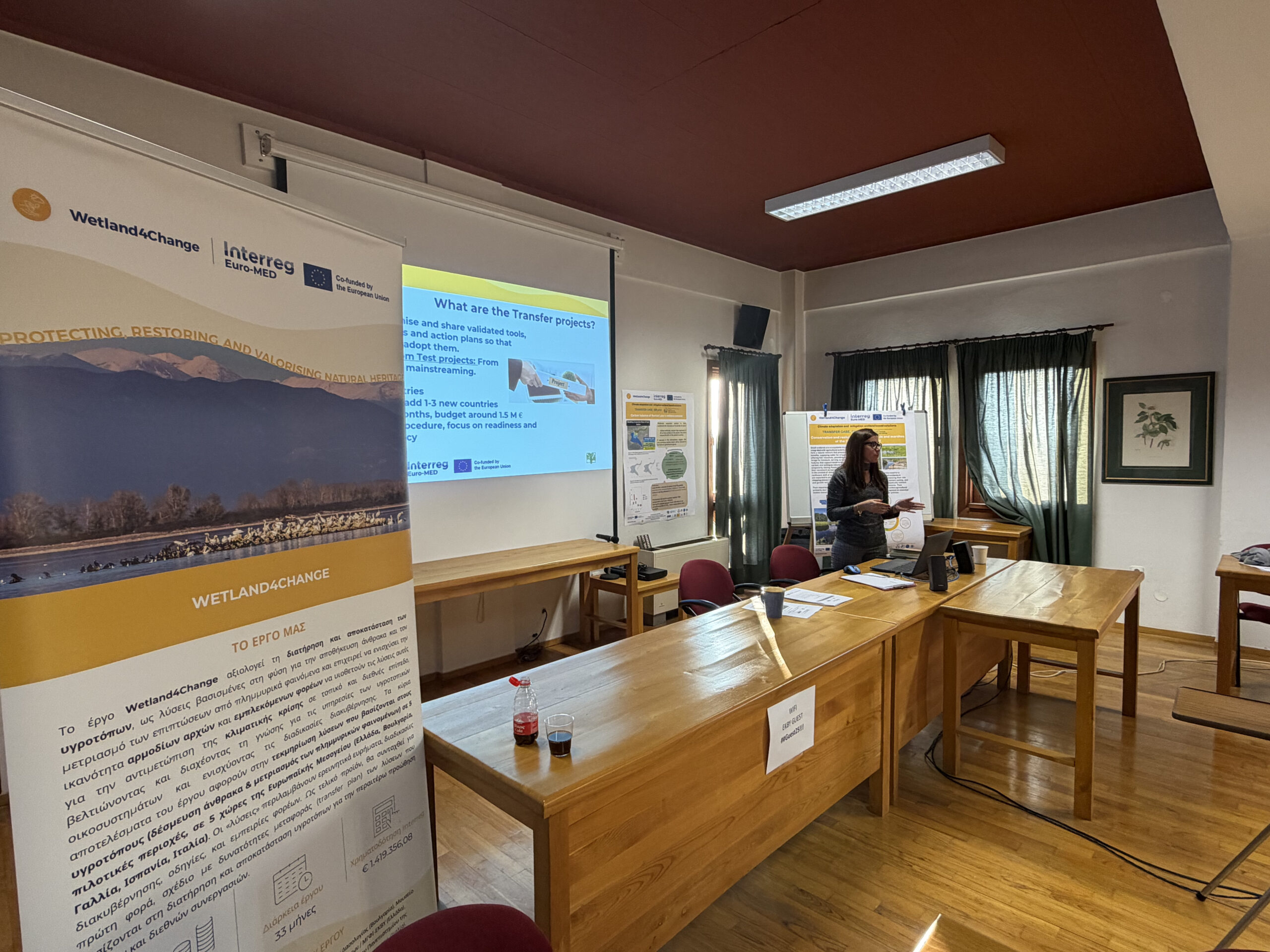

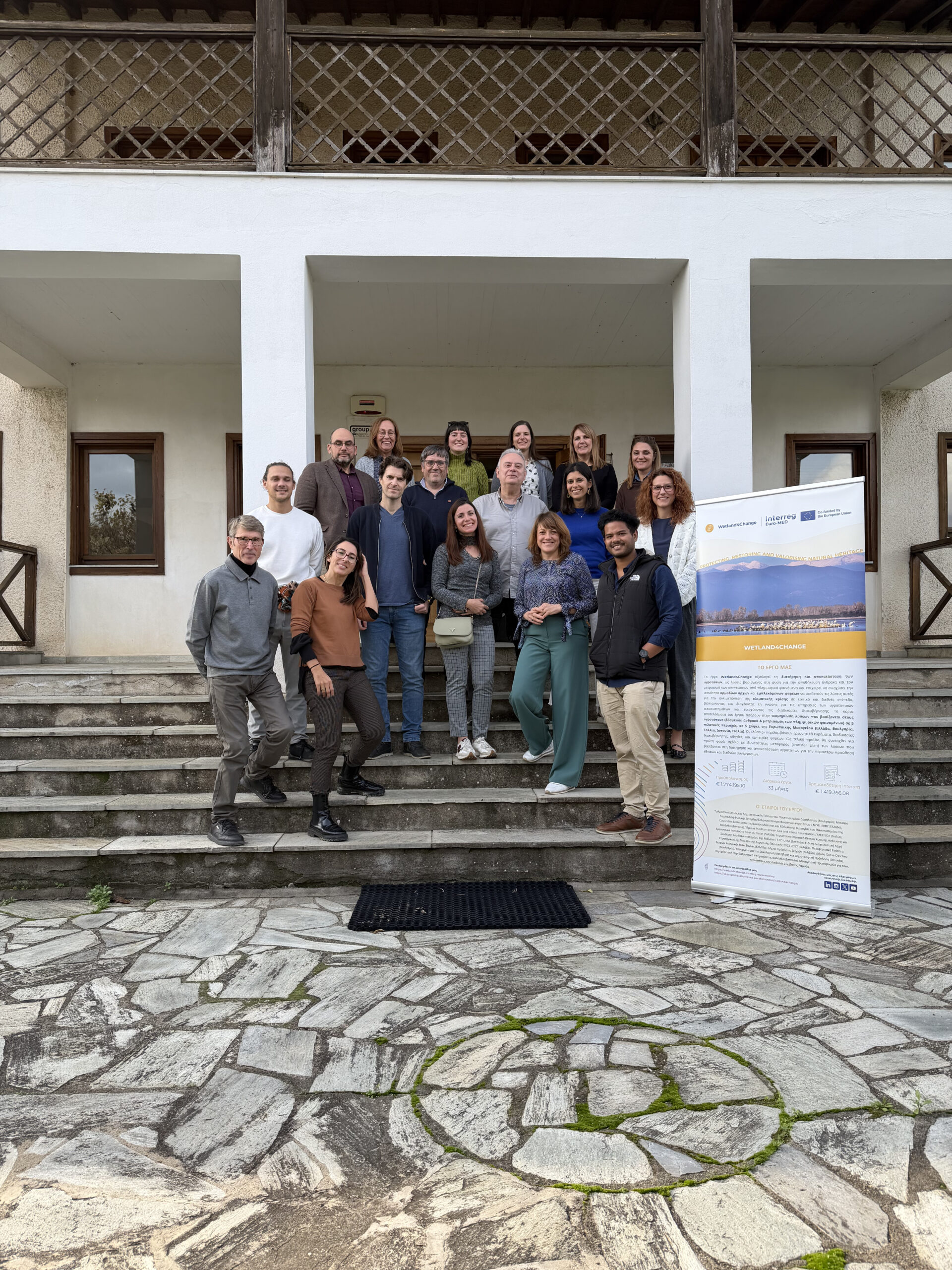
The fourth in-person meeting and third technical session of the Wetland4Change project took place in Thessaloniki from the 2nd to the 4th of December 2025, hosted by EKBY. With two-thirds of the project now completed, this gathering represented a key turning point to close pending issues, consolidate datasets, and align the final steps on carbon sequestration and flood regulation across all pilot sites.
Day One opened with a focus on finalising data collection for the two core solutions—carbon sequestration and flood regulation. In the morning, partners reviewed the status of Tier 1–2–3 carbon assessments and the hydrological model that underpins the flood-regulation analysis. In the afternoon, two productive working sessions, each dedicated to the two core solutions, helped assess remaining gaps, consolidate datasets and align the next validation steps across all pilot sites.
The three days agenda also included a comparative review of how GAEC 2 (wetland and peatland protection) is applied in the five participating countries, an element essential for understanding the policy landscape and assessing the transferability of wetland-based solutions.
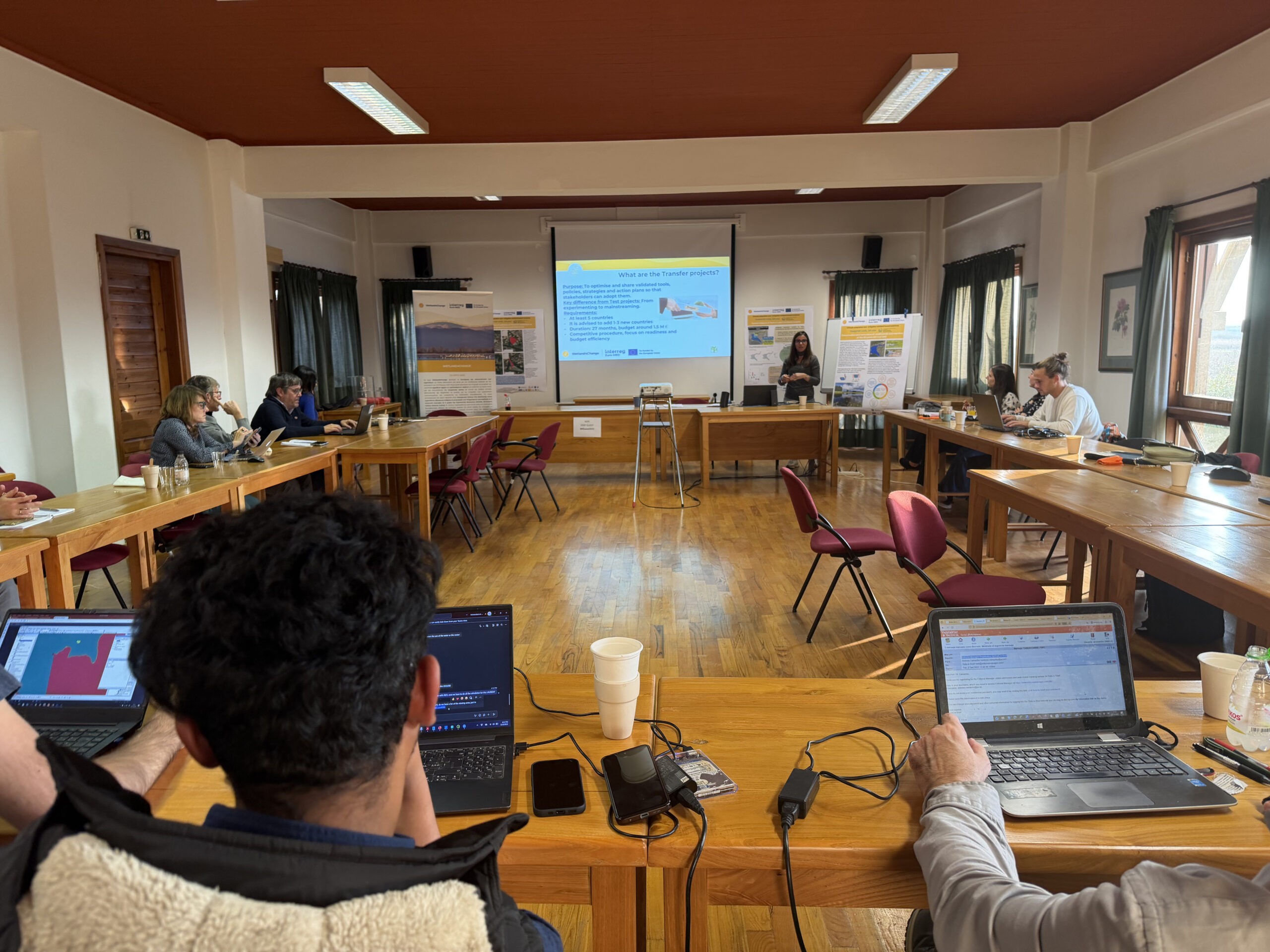
GAEC 2: Policy Context and Implications for Wetland-Based Solutions
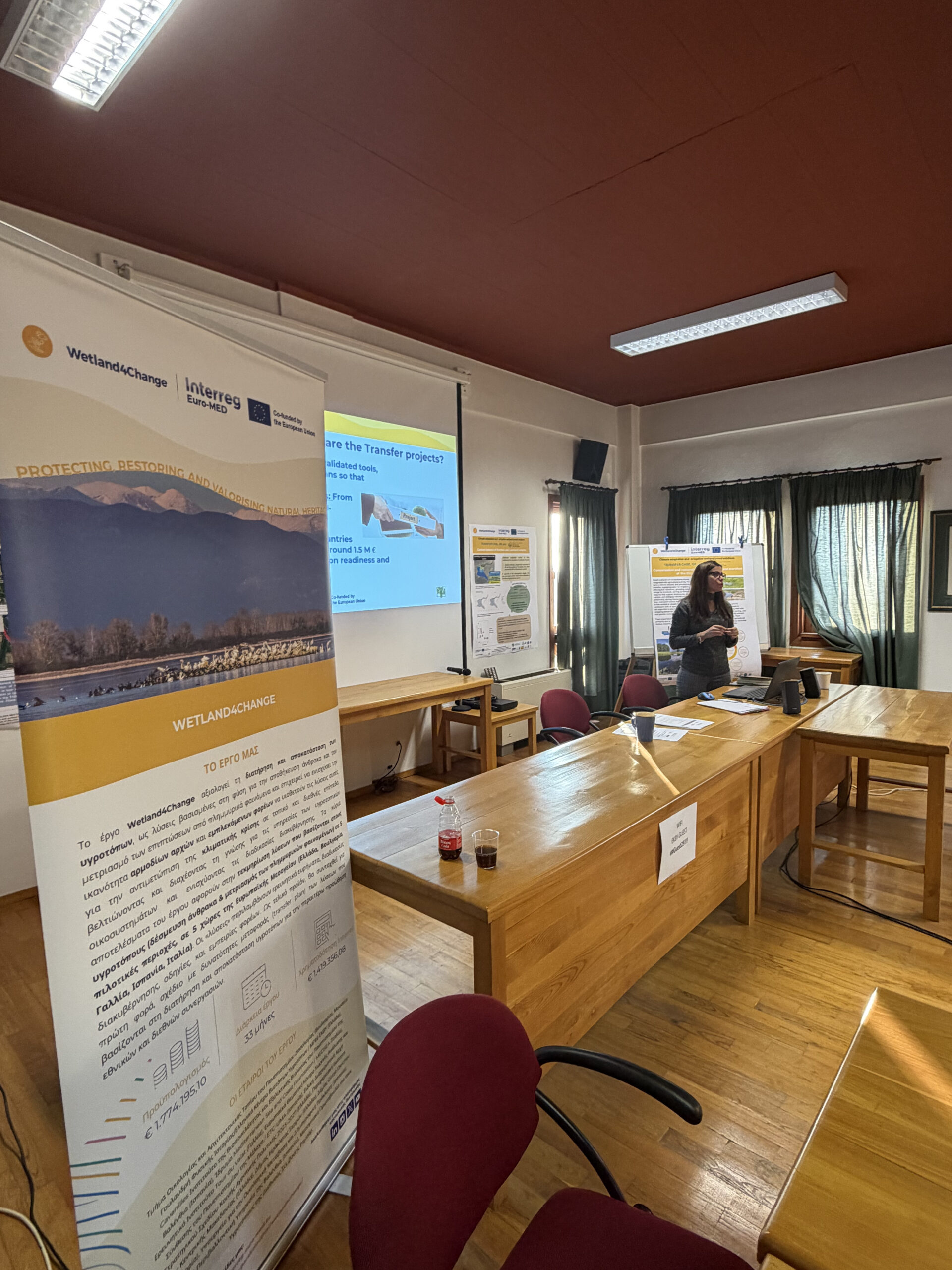
A central contribution came from the presentation on the project’s Transfer Plan, which clarifies how all results will be integrated into a coherent package of outputs and transfer cases. The plan includes five main components, including:
- a synthesis of testing and validation results for both solutions;
- the development of Transfer Cases for the five pilots (linked to story maps, videos and the booklet);
- additional cross-border or national transfer cases;
- Interreg Euro-Med recommendations for policy uptake;
- identification of missing datasets and long-term knowledge-base needs
Throughout the technical sessions, partners also began defining conservation and restoration priorities for each pilot site, structured around the four axes that guide all Transfer Cases: knowledge improvement, capacity building and awareness, governance, and wetland conservation and restoration priorities.
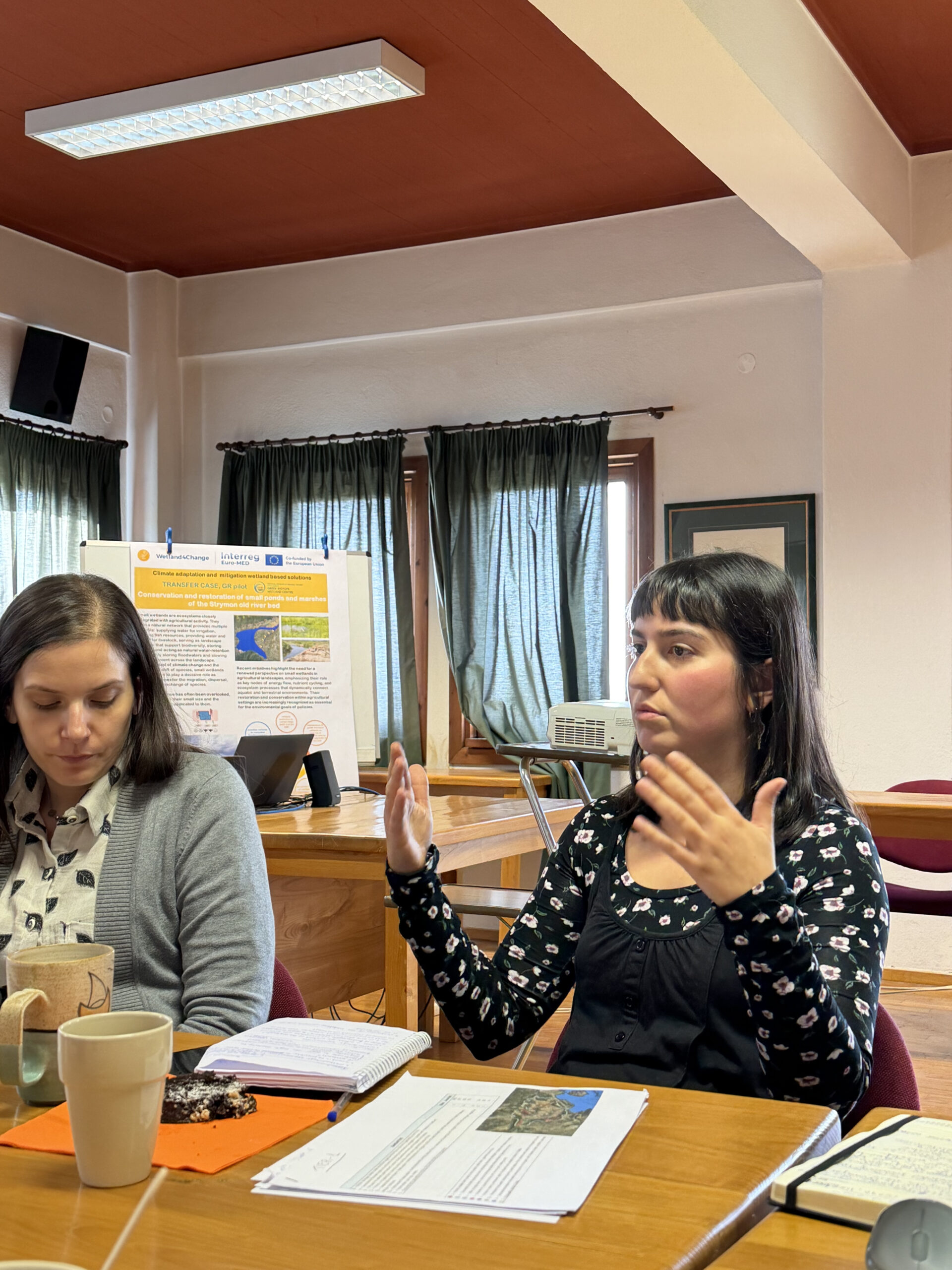
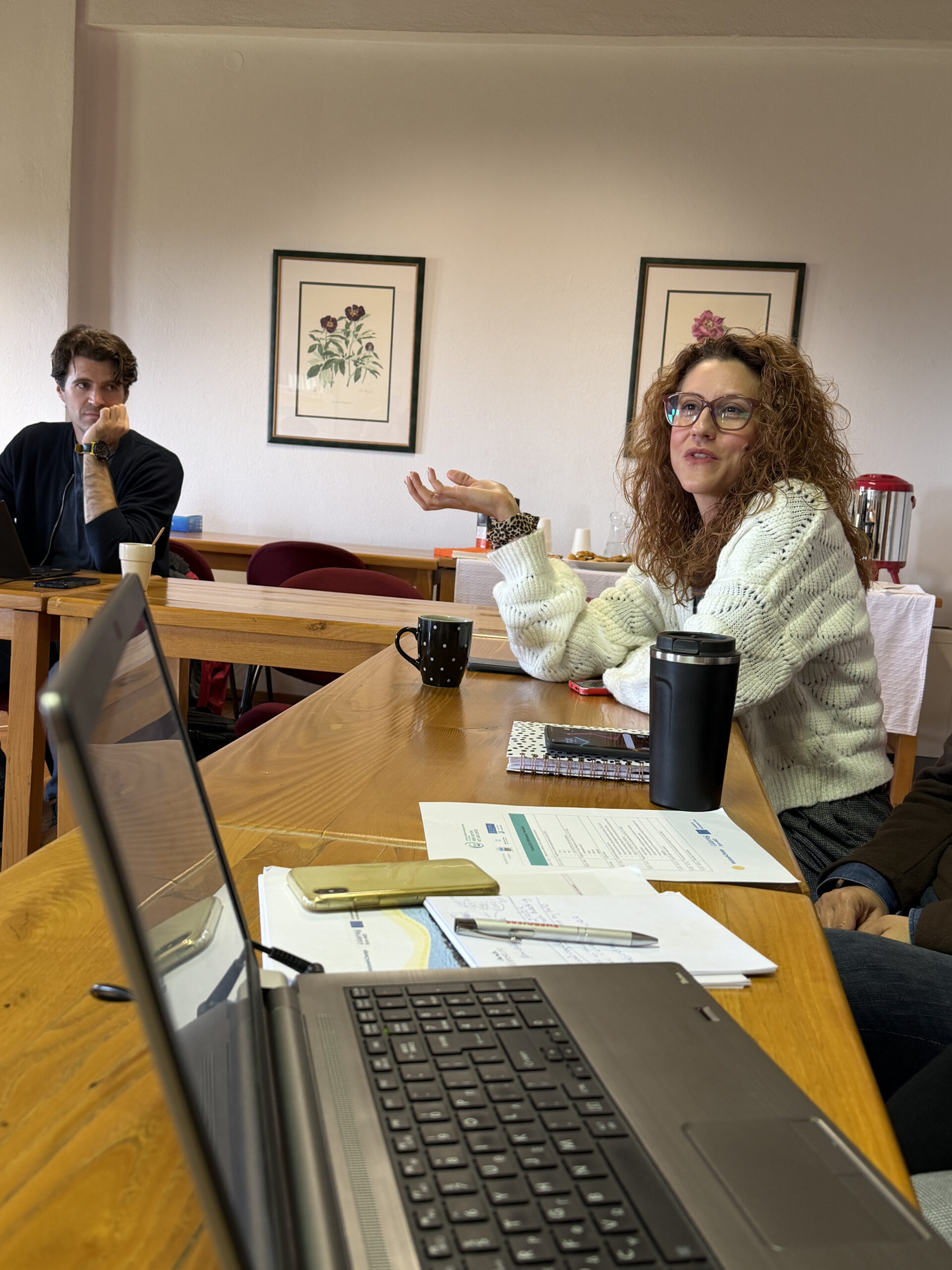
A dedicated session was also devoted to examining how GAEC 2 (wetland and peatland protection) is being applied in the five participating countries. As the new mandatory standard under the EU’s Common Agricultural Policy, GAEC 2 plays a central role in safeguarding high-carbon soils by restricting practices such as deep tillage, new drainage or peat extraction—actions that could significantly increase carbon emissions. Understanding these national differences is essential for assessing how Wetland4Change solutions can be transferred and adopted across diverse policy contexts.
The analysis held during the Wetland4Change’s meeting highlighted differences in prohibited practices, wetland typologies covered, datasets used and national constraints in Bulgaria, France, Greece, Italy and Spain.
From Transfer Cases to Policy Uptake: What the Thessaloniki Sessions Revealed
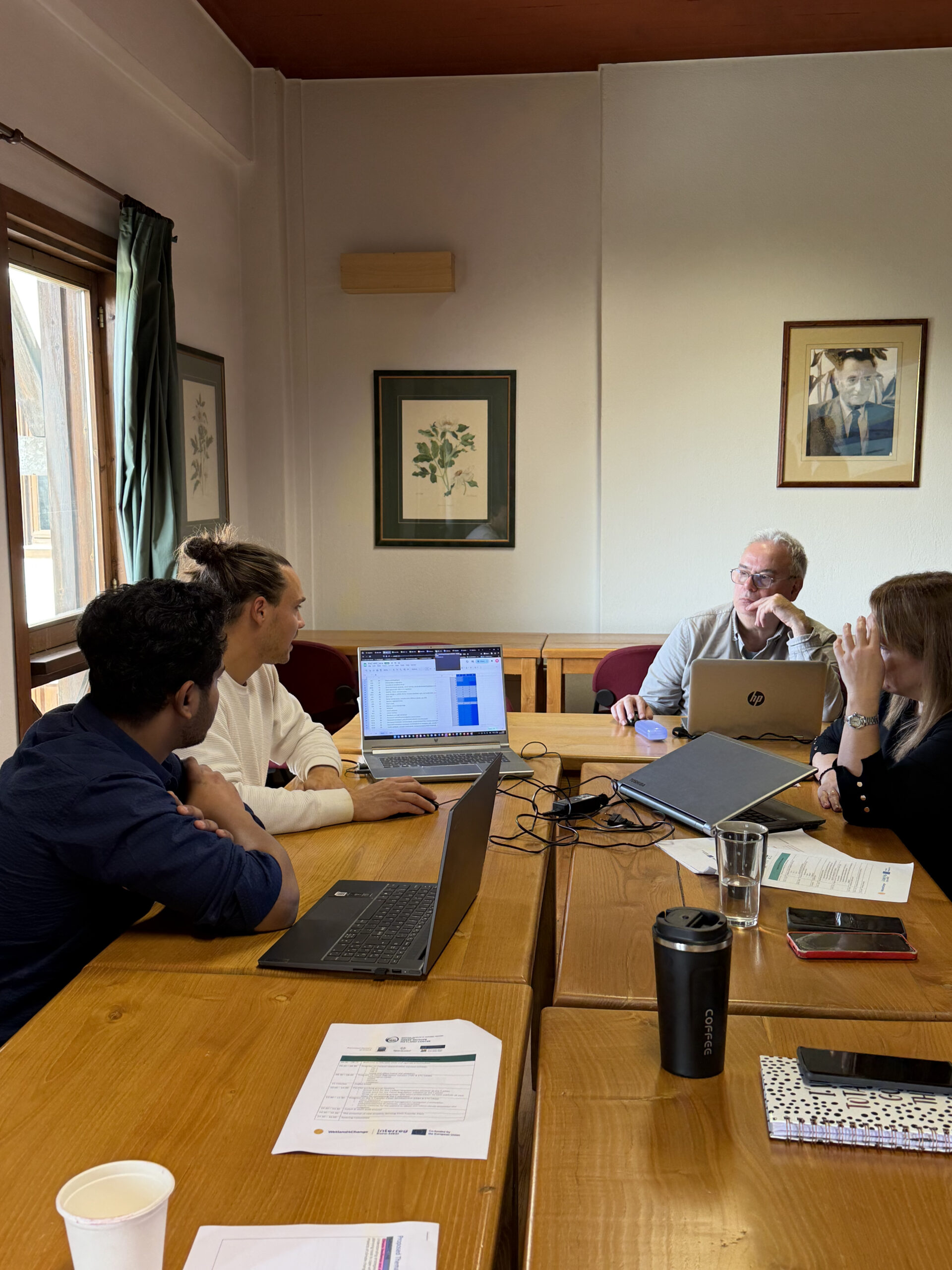
Parallel work sessions supported the consolidation of datasets, the harmonisation of methodologies, and the organisation of the final project outputs: story maps, the joint booklet for both solutions, video scripts, and the framing of the Transfer Case documentation. These discussions also addressed the urgent actions to be completed, including the finalisation of conservation-restoration priorities per pilot, the validation of the flood-regulation workflow, and the production of the solution-based datasets.
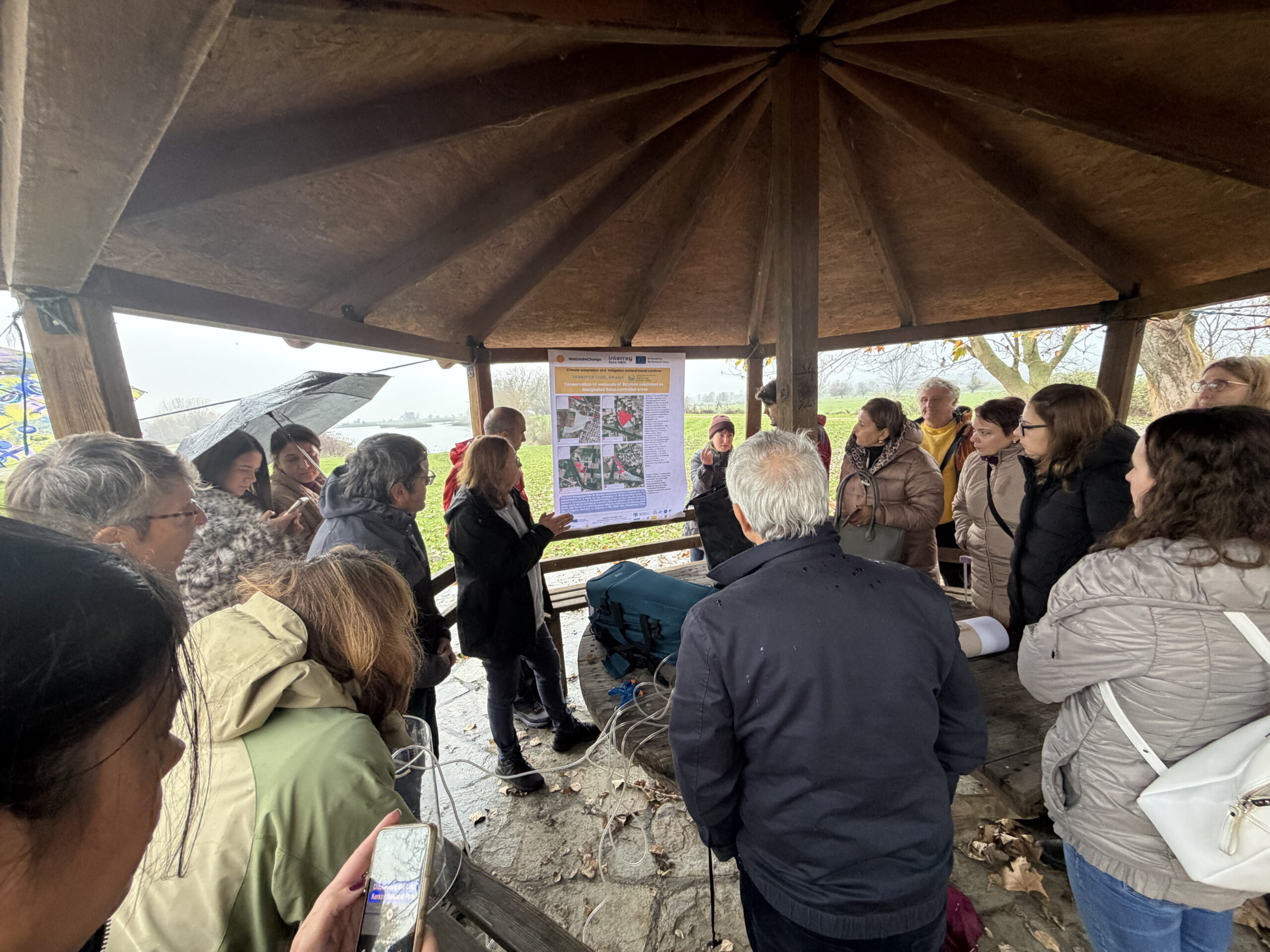
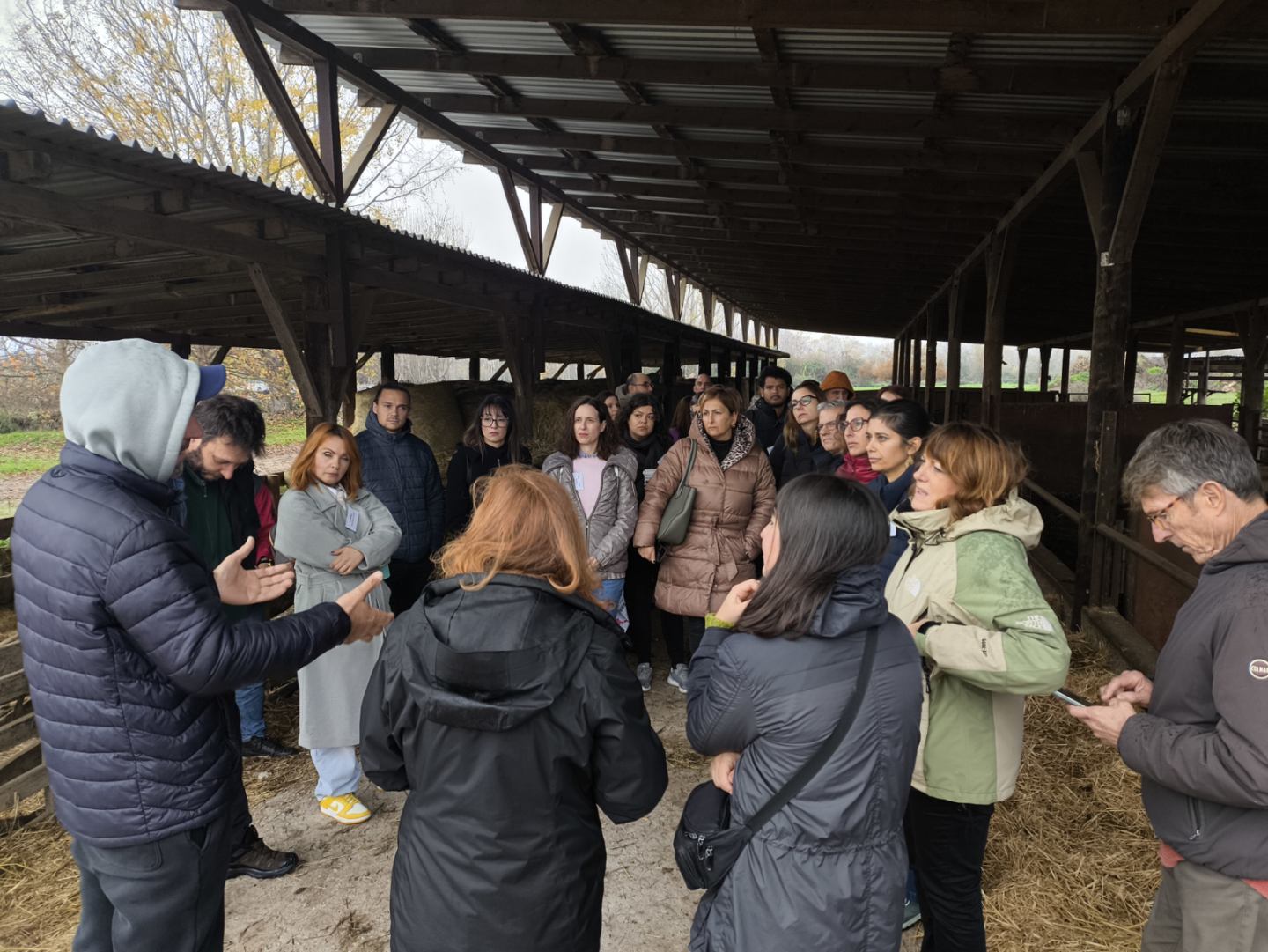
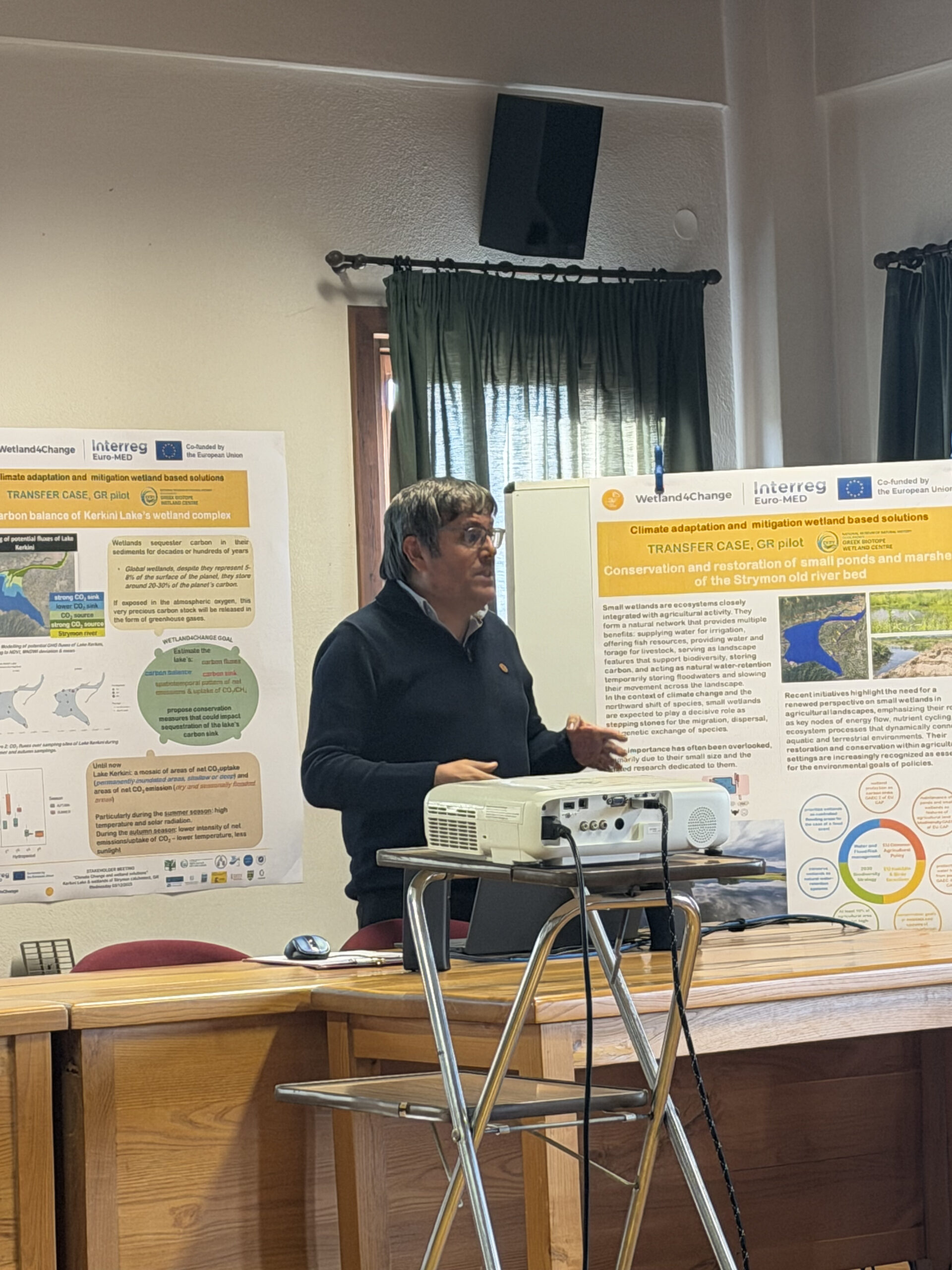
On the second day, the programme also included a dedicated Stakeholders Meeting on Climate Change and Wetland Solutions and the visit site to the Kerkini Lake, the greek pilot site (where CO2 gas fluxes have been monitoring for the very first time in Greece, see previous article here), bringing together local and national actors for an exchange on policy, practice and the relevance of wetland-based solutions in the Euro-Mediterranean region.
The Thessaloniki meeting marked the beginning of three intense days of technical coordination and field exchange, setting the course for the project’s final phase and the delivery of all major outputs by spring 2026.
This technical meeting takes place just six months before the end of the project, which means that our results are now mature enough to support informed decisions and to jointly propose measures across the different pilot sites. We are particularly excited because we feel we are introducing an innovative approach to carbon sequestration, while at the same time testing and validating our findings together with stakeholders. Within Wetland4Change, this phase represents a unique opportunity to advance scientific knowledge, strengthen validation processes, and increase awareness around wetland-related challenges and the crucial role these ecosystems play. Many of these aspects are still not fully recognised by stakeholders or adequately reflected in policy frameworks—whether related to flood and water management, regional climate adaptation planning, or other national and EU-level regulations, GAEC 2 (Good Agricultural and Environmental Condition), which sets specific minimum standards for the protection and sustainable management of wetlands and peat-rich soils to safeguard their carbon storage potential.