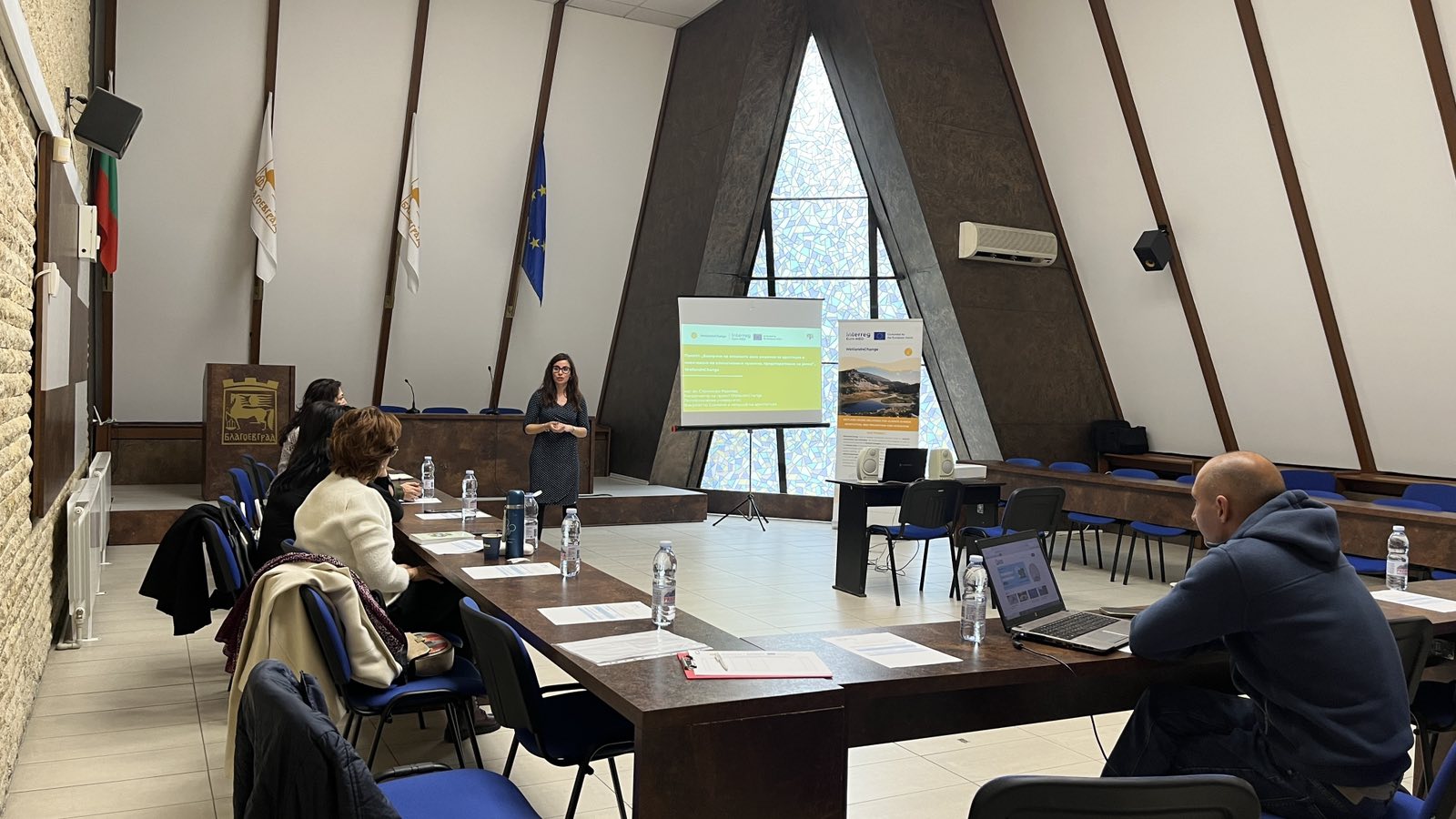

Efforts to strengthen flood protection and climate resilience in southwestern Bulgaria took a major step forward last week as local stakeholders gathered the fiftth of November under the Wetland4Change project alongside the lead partner the University of Forestry | Sofia to discuss how wetlands can serve as vital nature-based solutions.
The meeting, held in the Municipality of Blagoevgrad, brought together representatives from local authorities, environmental organizations, and civil society to exchange ideas and identify actions for integrating wetland restoration into regional development, climate policies and to foster open discussion on the multiple ecosystem services provided by wetlands.
From flood regulation to carbon capture. Participants explored how natural systems in Struma catchment can be better protected, managed, and recognized in local planning through four thematic lenses: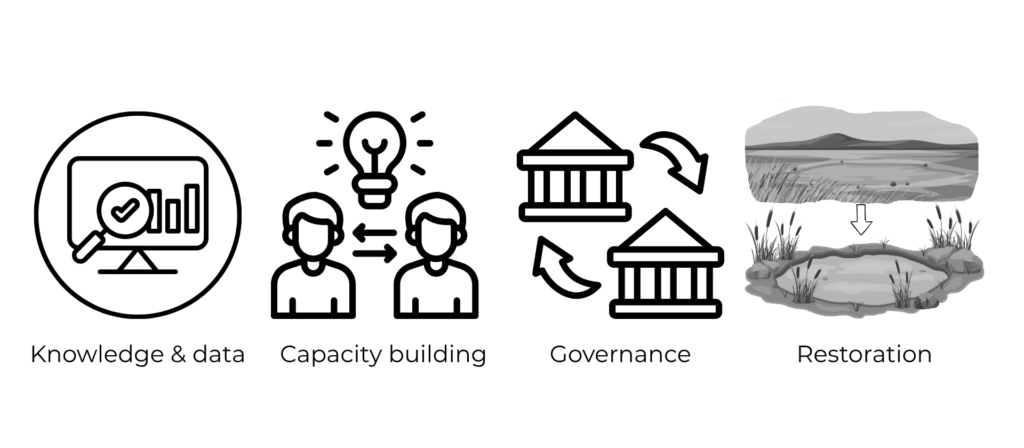
Here are the key findings highlighted at the meeting :
Recognizing Wetlands in Local Planning
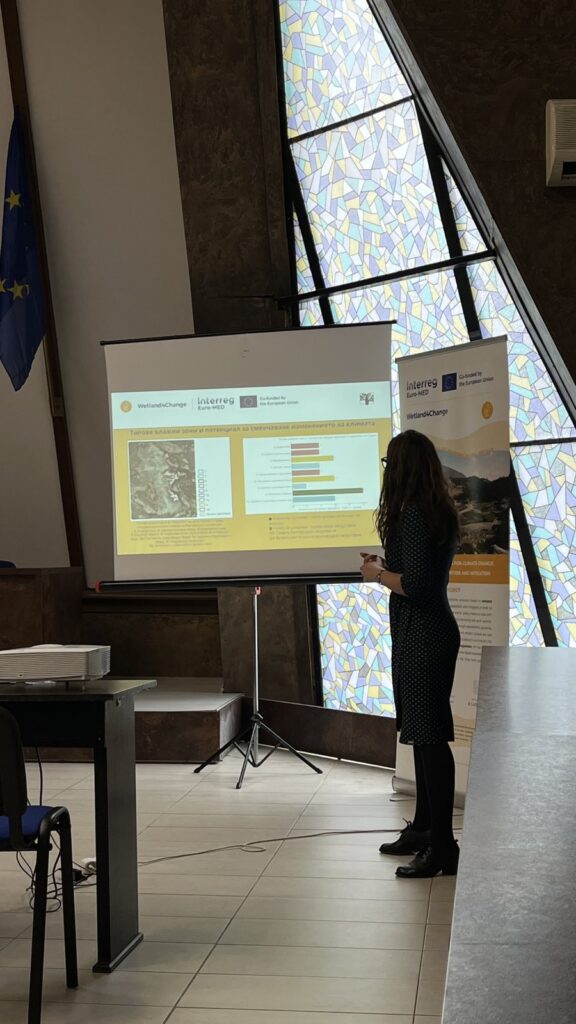
Despite their benefits, the group identified several major challenges. A key problem is that wetlands are often invisible in official plans. They are not recognized on town maps or in land-use rules. This makes it difficult to protect or restore them.
Participants emphasized the importance of formally recognizing wetlands as distinct territorial units within spatial and development plans. Such recognition would make it possible to implement effective restoration and protection measures at the municipal and regional levels.
Agriculture, Communication, and Community Engagement
Agricultural practices and funding limitations were identified as ongoing challenges to using wetlands sustainably for flood management. Participants highlighted the need for stronger communication and public awareness, stressing that understanding the value of wetlands must begin at the governance level and reach the wider community through education and outreach.
Examples of successful initiatives by WWF–Bulgaria, the BALKANI Wildlife Society, and the Balkanka Association were shared, showing how NGOs have effectively engaged citizens in wetland conservation.
Bridging Knowledge and Policy Gaps
Stakeholders noted that public knowledge about the climate and carbon-capture functions of wetlands remains limited. They called for research-based projects, training programs for local authorities, and targeted campaigns to build broader understanding.
Flood protection was widely recognized as a strong argument for wetland restoration, especially in flood-prone areas. Meanwhile, eutrophication and agricultural pollution were identified as key environmental pressures requiring stronger control and inclusion in management plans.
Governance Challenges and Next Steps
The meeting also highlighted key governance and policy shortcomings:
-
Wetlands are not recognized in statutory land-use planning documents.
-
There is no local or regional legislation addressing their climate regulation functions.
-
Funding for restoration remains scarce.
-
Institutional responsibilities are fragmented, resulting in weak monitoring and enforcement.
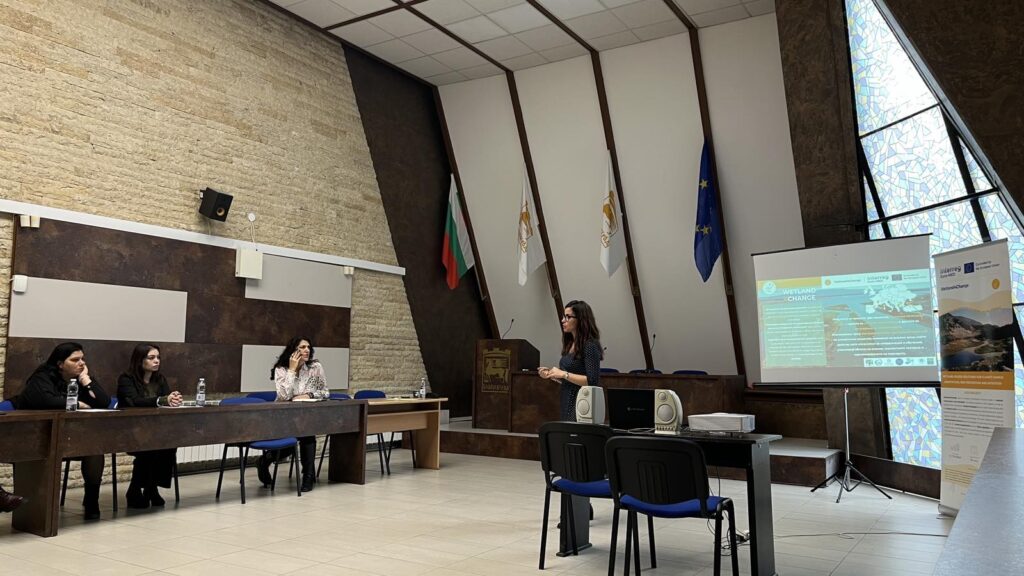
Wetland4Change lead partner Stanimira Ivanonva | University of Forestry local meeting in Bulgaria 5 November 2025
Participants concluded that policy adjustments are needed to include wetlands as functional landscape units in spatial planning. They also agreed that achieving effective and sustainable wetland management in the Struma catchment requires action across several key areas:
-
Strengthened communication and coordination among institutions, local administrations, and communities to ensure coherent decision-making and shared priorities.
-
Capacity building and specialized training for local government staff to enhance knowledge of wetland management, restoration techniques, and the use of nature-based solutions for flood and climate resilience.
-
Comprehensive information and awareness campaigns aimed at both decision-makers and the wider public, to increase understanding of wetlands’ ecological and socio-economic importance.
-
Establishment of dedicated financial mechanisms to fund restoration initiatives and secure the long-term maintenance of wetland areas.
-
Expansion of research and monitoring efforts focused on assessing local wetland functionality, ecosystem services, and their contribution to climate change mitigation.