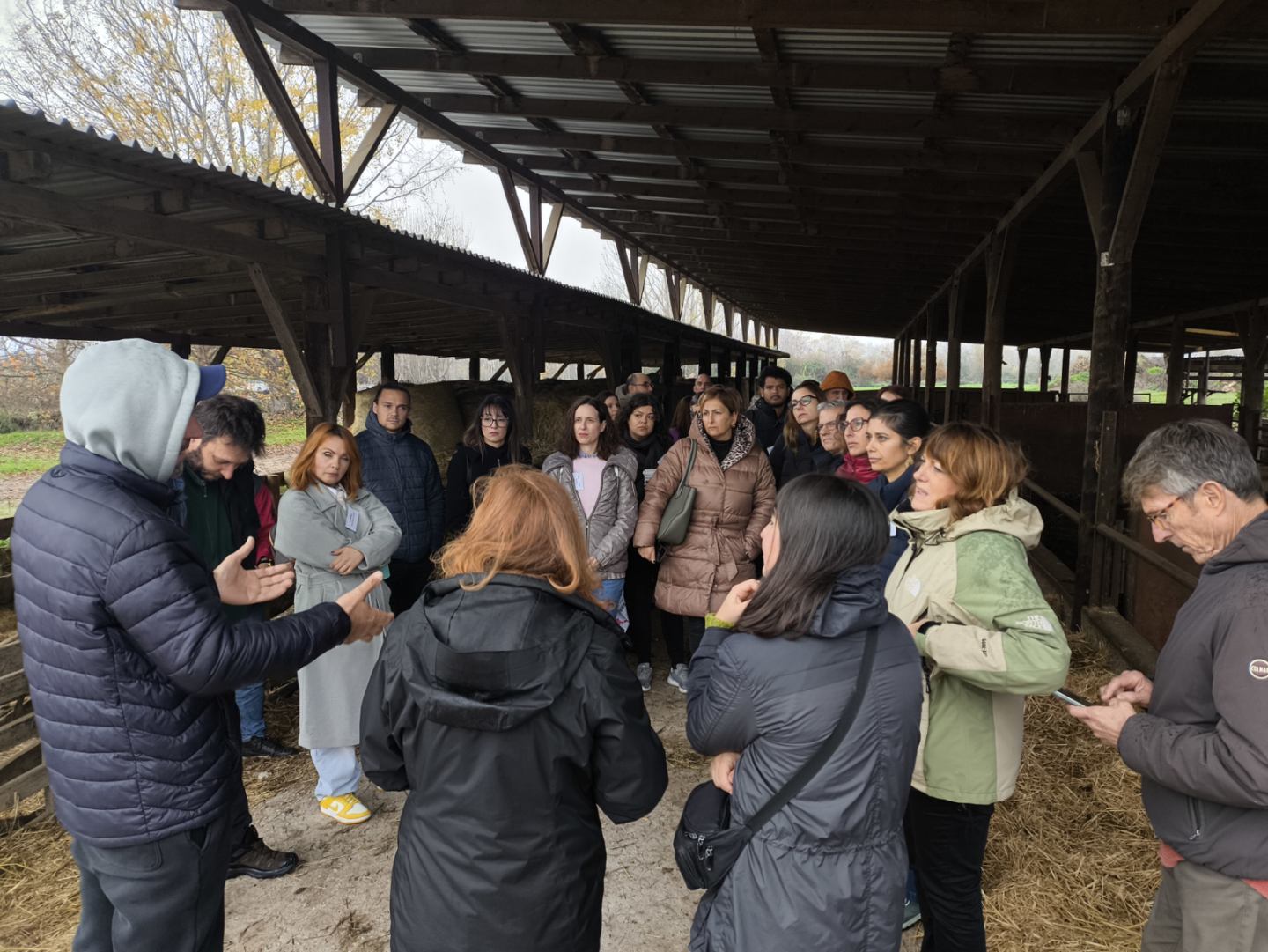
Camargue, France | 28 October 2025 : The Tour du Valat research institute, a partner of the Wetland4Change project, hosted two events in order to present the project and discuss in details the two solutions developed that are focusing on wetlands’ vital roles in carbon sequestration and flood regulation. The gatherings brought together scientists, managers, and decision-makers from across the Camargue and the Durance basin to strengthen dialogue between research and policy, and to co-design practical pathways for integrating wetland-based solutions into territorial management.
Flood Regulation by Wetlands
The first workshop Milieux Humides et Régulation des crues dans le bassin de la Durance, dedicated to flood regulation, gathered stakeholders in wetland management, climate adaptation, and territorial planning. The session began with a presentation of the objective of this Wetland4Change solution, which is to:
Evaluate the capacity of wetlands to regulate floods as a key, nature-based solution for climate resilience.
The mediterranean faces mounting pressures by the growing human population density, especially along coasts which is dangerously affecting wetlands and is driving increasing water abstraction and declining water availability. To achieve this, the project is testing and validating a standardized methodology, applied across different levels (Tiers 1 to 3), to map both the supply of the flood-regulation service provided by wetlands and the demand for this service across the basin.
The expected outputs of this work include:
-
A flood-regulation capacity map, identifying priority “hotspot” areas and the levels of protection or restoration needed;
-
The development of policy-relevant tools that strengthen the link between scientific knowledge and wetland management practices.
Discussions highlighted that while several organizations already study flood risks, wetlands are still insufficiently recognized as natural flood prevention solutions, especially at the basin scale. The maps developed through the Wetland4Change project can be used especially to promote public awareness and to also validate the studies of different research and management bodies in the basin.
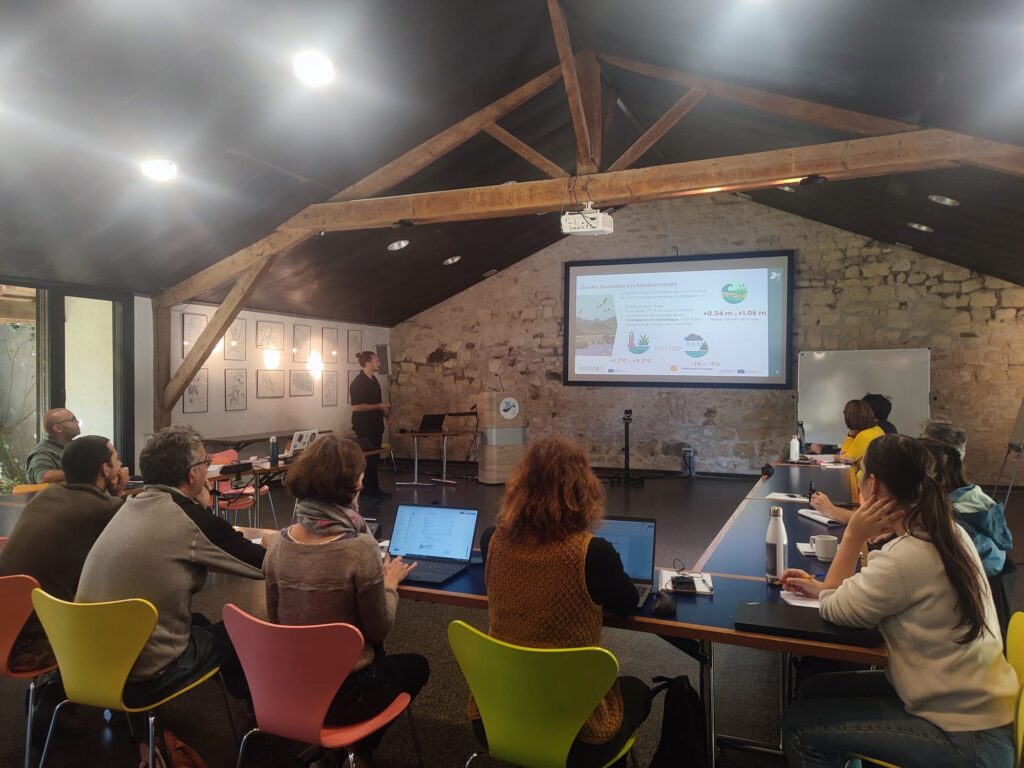
These maps, now being shared with regional authorities and the French Water Agency | Agence de l’Eau RMC, will enhance public awareness and support local planning efforts by illustrating wetlands’ natural capacity to buffer floods.
However, participants underlined the need for finer-scale data and stronger links with biodiversity studies, stressing that collaboration with local communities will be key to deepening understanding and translating scientific outputs into actionable management practices.
Carbon Sequestration by Wetlands
The second event entitled Milieux Humides et Séquestration du carbone dans la Camargue focused on carbon sequestration and the role of wetlands as carbon sinks and diving more through the case of the Camargue.
Wetlands store approximately 20% of the planet’s organic ecosystem carbon, outperforming forests and marine ecosystems in carbon storage efficiency per unit area. This is largely due to their anoxic soil conditions, which slow decomposition and allow organic matter to accumulate over time. (Learn more). To increase their capacity, Wetland4Change test different wetlands capacity to stock carbon and how factors like hydrology, vegetation cover and land use influence the process to finally evaluate effective management strategies that can enhance them in collaboration with local management bodies.
Despite growing global attention to carbon storage, local stakeholders raised an important point: carbon remains an abstract and an underrepresented topic in wetland management compared to biodiversity or water quality.

Participants identified major challenges such as limited data continuity, insufficient expertise, and the absence of clear institutional leadership on carbon governance in the Camargue. They emphasized the need for long-term monitoring, capacity-building for local managers, and accessible communication tools to make carbon dynamics more visible and understandable.
This active exchange also resulted with concrete needs to be included in the future:
- Developing more technical expertise and training on carbon flux monitoring;
- Long-term, stable funding and methodological consistency;
- Broader stakeholder involvement, including farmers, fishers, and local authorities;
- Establishing simplified, comparative indicators to interpret carbon data;
- Better integration of carbon into wider climate and wetland management policies;
- Stronger communication channels to connect scientific results with real-world decision-making.
Building a Science/Policy Bridge for Climate Action
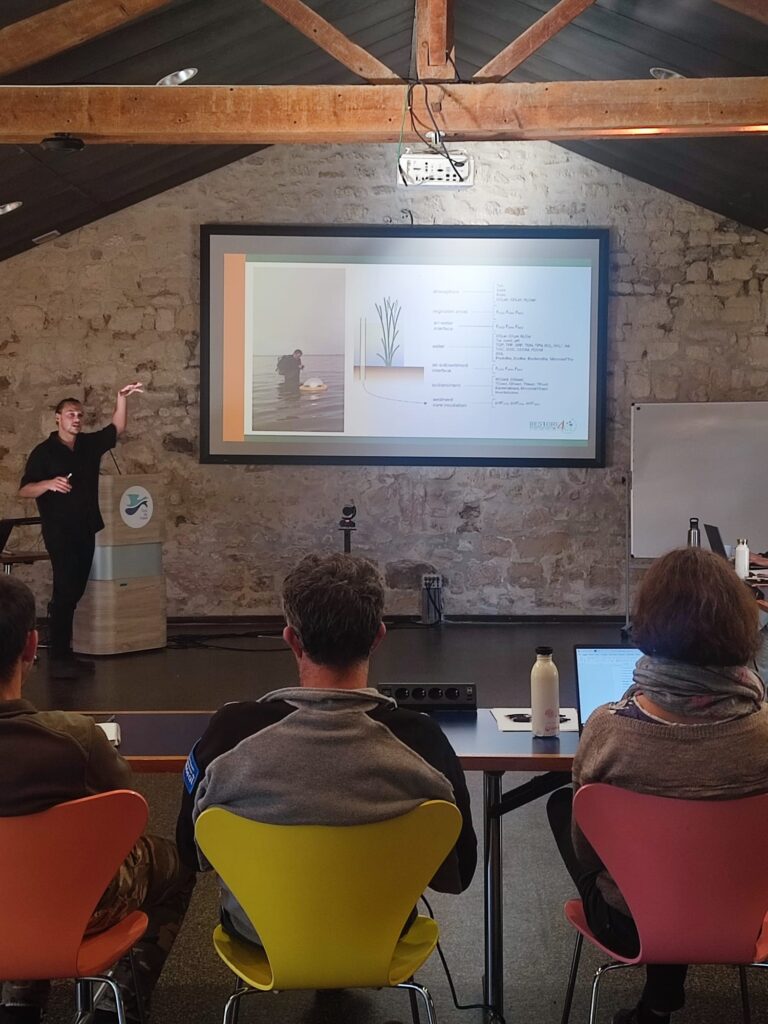
Wetland4Change stakeholders meeting in Camargue France 28 of October 2025
Both events underscored the growing recognition of wetlands as multi-benefit ecosystems that contribute to climate regulation, flood mitigation, and biodiversity conservation. The dialogues in Camargue reaffirmed the importance of co-developing tools that bridge the gap between scientific evidence and territorial decision-making.
As part of Wetland4Change, Tour du Valat and its partners will continue to foster this exchange, supporting the integration of wetland-based climate solutions into local management, planning, and public policy.