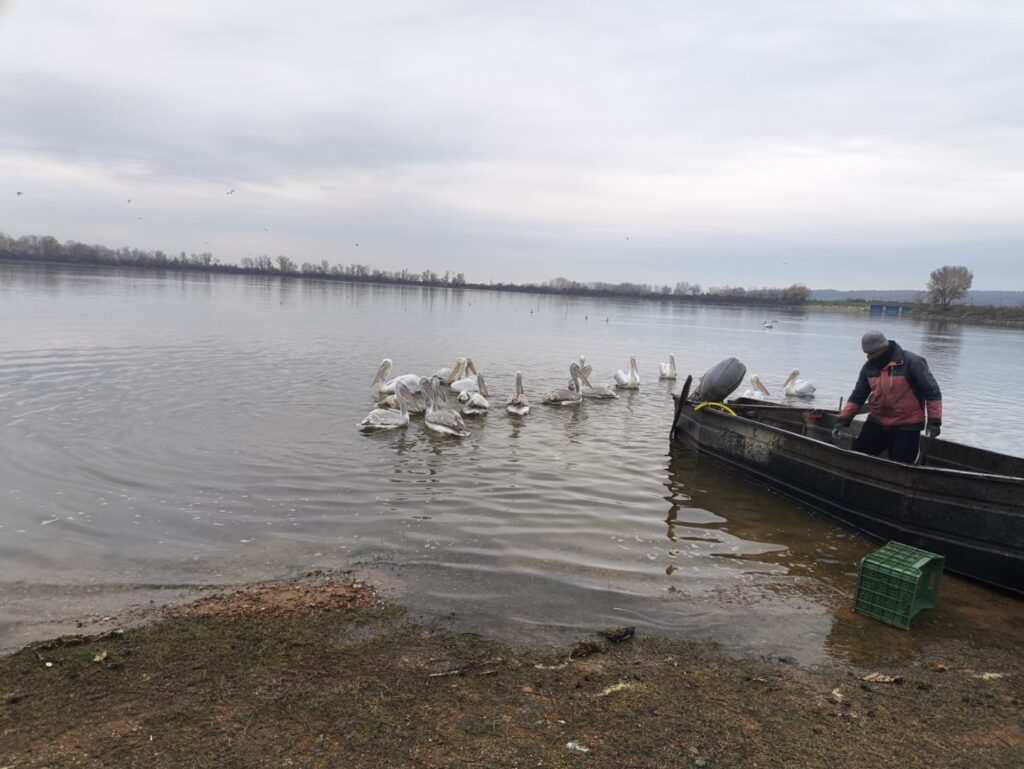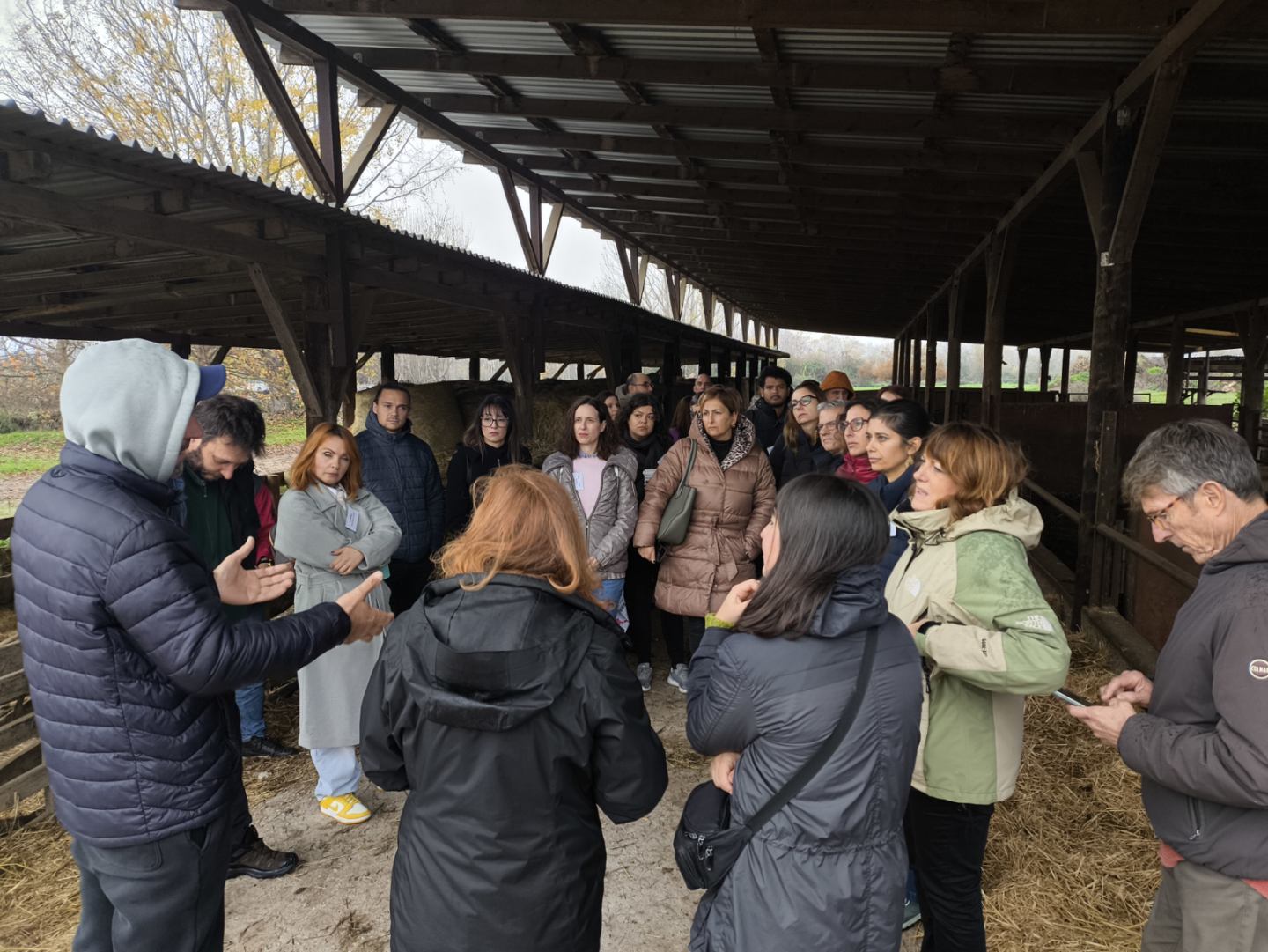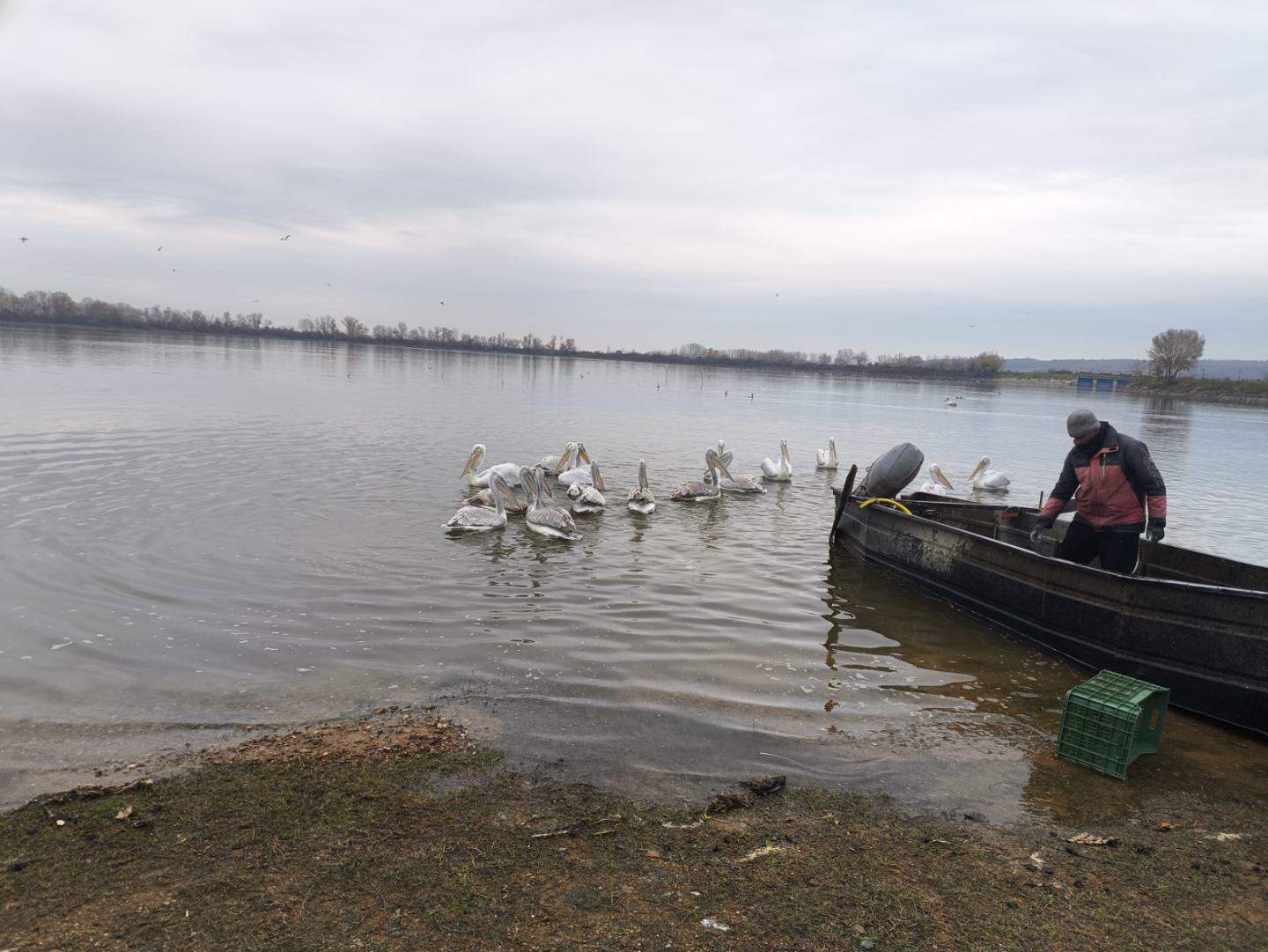

The second day of the Wetland4Change recent meeting last december moved from the technical sessions in Thessaloniki to a full day of field exploration and stakeholder discussions at Lake Kerkini National Park, Greece’s pilot site. Hosted by EKBY – National Museum of Natural History Goulandris, the visit offered a direct window into one of the most dynamic inland wetlands of the Euro-Mediterranean region and highlighted the ecological, hydrological and policy challenges shaping this unique system.
Together with Wetland4Change partners, the field visit also brought in local stakeholders, representatives of the Lake Kerkini Management Authority (Theodoros Naziridis from the Management Unit of the Protected Area of Kerkini Lake), farmers’ cooperatives (Tryfon Giantsidis the president of the Livestock Cooperative of Buffalo Breeders of Greece), local and regional authorities (Municipality of Irakleia, Directorate of Technical Works in the Regional Unit of Serres,Water Directorate of Eastern Macedonia & Thrace), local ecotouristic businesses (Nikos Gallios from Agroxenia initiative for agrotourism) and national institutions (Nikolaos Karavas from the Management Authority of the National Strategic Plan of CAP), creating a shared space to discuss water management, agricultural practices and the implications of GAEC 2 for the wider Strymon catchment.
A Highly Dynamic Artificial Lake Shaped by the Strymon River
Lake Kerkini is an artificial freshwater reservoir created in 1932 over a former swamp in Central Macedonia. Today it is a Ramsar Site, a Natura 2000 Special Protection Area, and one of Greece’s most emblematic wetland landscapes.
The lake receives water from the Strymon River, whose inflows vary dramatically throughout the year. These fluctuations create annual water-level changes exceeding 5 metres, with minimum levels in autumn–winter and maximum levels in late spring.
This strong hydrological pulse shapes a mosaic of habitats, including deep-water zones with permanent inundation, shallow margins dominated by emergent and floating vegetation, – highly dynamic floating vegetation such as Nymphaea alba and Nymphoides peltata – intermittently flooded mudflats and alluvial deposits,as well as riparian Salix stands and remnants of alluvial forest.
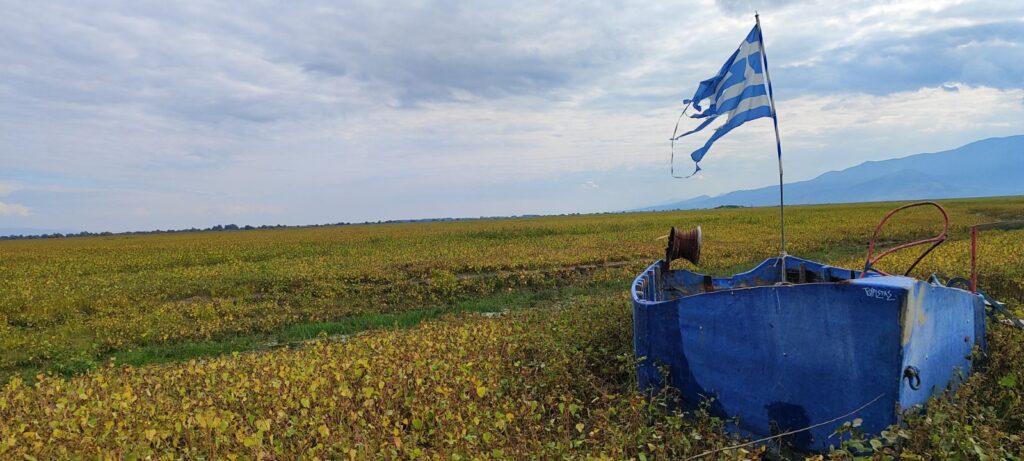
Kerkini Lake
Although reedbeds and the rich Strymon riparian forest have declined over the years, the lake remains a crucial breeding, feeding and resting site for numerous local but also migratory birds – including the Dalmatian pelicans, fish and amphibian species.
Carbon Fluxes: First Measurements and What They Reveal
Kerkini is one of the Wetland4Change pilots dealing with process-based carbon flux assessment, the first of its kind in Greek wetlands. Results from the first field campaigns include:
– Deep-water sectors act as strong CO₂ sinks (≈ –50 mg CO₂/m²·h), likely linked to stable/permanent inundation and high photosynthetic activity.
– Shallow, permanently flooded zones show moderate CO₂ uptake (≈ –20 mg CO₂/m²·h).
– Intermittently flooded areas behave as net emitters (≈ 150 mg CO₂/m²·h), driven by exposure–inundation cycles and active microbial turnover in deposited sediments.
– Dry outer zones record the highest emissions (≈ 300 mg CO₂/m²·h) due to aeration of exposed soils, with vegetation flux measurements however pending during the following sampling campaigns.
The Strymon River functions as its own carbon compartment, with high turbidity, rapid turnover and frequent hydrological disturbances promoting episodic CO₂ release.
Further campaigns will expand temporal coverage, incorporate methane measurements and link vegetation structure to flux variability.
“For the first time in Greece, we are attempting to estimate the carbon sequestration potential of wetlands – says Anastasia Chatzimentor, Researcher at EKBY . Here in Kerkini, thanks to Wetland4Change, we are measuring carbon fluxes at various sites and seasons in the wetland and by exploring the lake’s carbon storage capacity in wetland vegetation and sediments, we will be able to investigate Lake Kerkini’s carbon balance – meaning whether Lake Kerkini finally “loses” or preserves/sequesters the carbon stored in the wetland. identifying the carbon fluxes of the system and assessing its capacity to act as a carbon sink—meaning the lake stores carbon both in its sediments and in its wetland vegetation.
We are measuring carbon fluxes together with key environmental parameters to understand whether there is a relationship between carbon dynamics and water quality of the lake. This work extends to the entire Strymon catchment and also to the smaller wetlands scattered in the agricultural landscape.
It is important for us to highlight the value of these small wetlands. They are often overlooked in water-management plans, yet they play a crucial role in regulating hydrology at the catchment level and provide important ecosystem services such as habitat, food and shelter provision for the local and migratory biodiversity. Recognising their importance is one of the core messages we aim to bring forward through this project.”
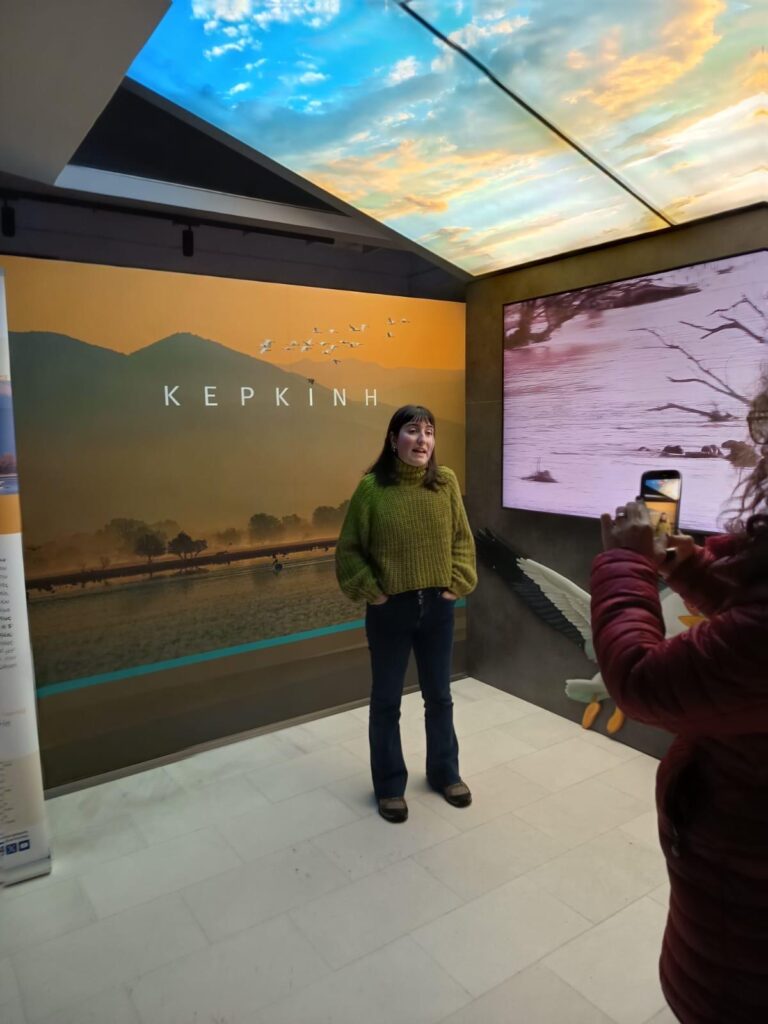
Anastasia Chatzimentor, Researcher at EKBY
Field Visit: From Water Buffalo to Pelicans — A Living Social–Ecological System
Kerkini is not only a hydrological system; it is also a living socio-ecological landscape.
During the visit, partners observed: the free-ranging water buffalo at the livestock unit of Tryfon Giantsidis, the president of the livestock cooperative of buffalo breeders of Greece, now integral to local grazing systems, Dalmatian pelicans, one of the flagship species of the lake, the interactions between agriculture, livestock, water management and biodiversity.
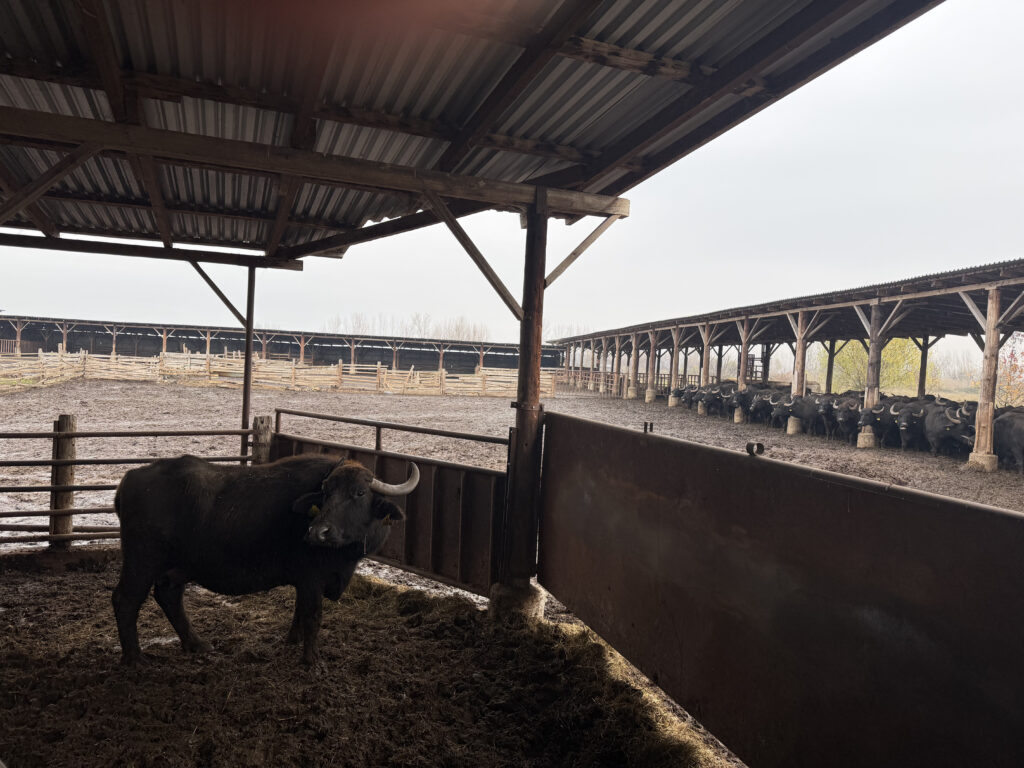
Buffalo in kerkini Lake
These elements illustrate how land use, ecology and livelihoods intersect, shaping both the pressures and the solutions relevant to Wetland4Change.
In the afternoon, partners met at the Kerkini Information Center with local and regional authorities, farmers’ cooperatives and national representatives. Discussions focused on hydrological constraints linked to Strymon inflows, sedimentation and water-level management, GAEC 2 obligations for farmers, the role of wetlands in climate adaptation, challenges faced by rural communities in managing water resources.
“We participate in Wetland4Change as an associated partner because the project addresses topics that are directly relevant to the CAP National Strategic Plan (Common Agricultural Policy of the European Union) – says Nikolas Karavas, Greek Managing Authority of the National CAP Strategic Plan 2021–2027
The structure of the CAP’s green architecture is built on conditionalities, and one of the mandatory standards for all farmers—GAEC2 on the protection of wetlands and peatlands—is closely linked to carbon sequestration.
Through this project, we can observe good practices from other countries on how these environmental standards are applied, especially regarding wetland protection. Wetlands and peatlands are highly valuable for agriculture and livestock, and it is essential to promote sustainable practices.
With Wetland4Change, we want to identify agricultural practices from the pilot sites that could be applied horizontally in Greece or integrated into future revisions of the CAPNational Strategic Plan. Ensuring that farmers receive the right financial support to adapt to these commitments allows both farming livelihoods and the environment to benefit.”