
Stories of culture, tradition and climate resilience from the Wetland4Change pilot sites
When we talk about wetlands, we often focus on biodiversity, ecosystem services, carbon sequestration or flood regulation. These functions are fundamental, and they are at the heart of the Wetland4Change project. But wetlands are also something else. They are places where people live, work and build identities. Places where knowledge is passed from one generation to the next. Places where culture has evolved alongside water, adapting to seasons, floods, droughts and changing landscapes.
To celebrate World Wetlands Day, Wetland4Change embarked on a journey across its pilot sites in Bulgaria, Greece, Italy, France and Spain to meet the people whose lives remain deeply connected to wetlands.
Their stories remind us that protecting wetlands also means protecting cultural heritage.
Bulgaria: weaving with the river
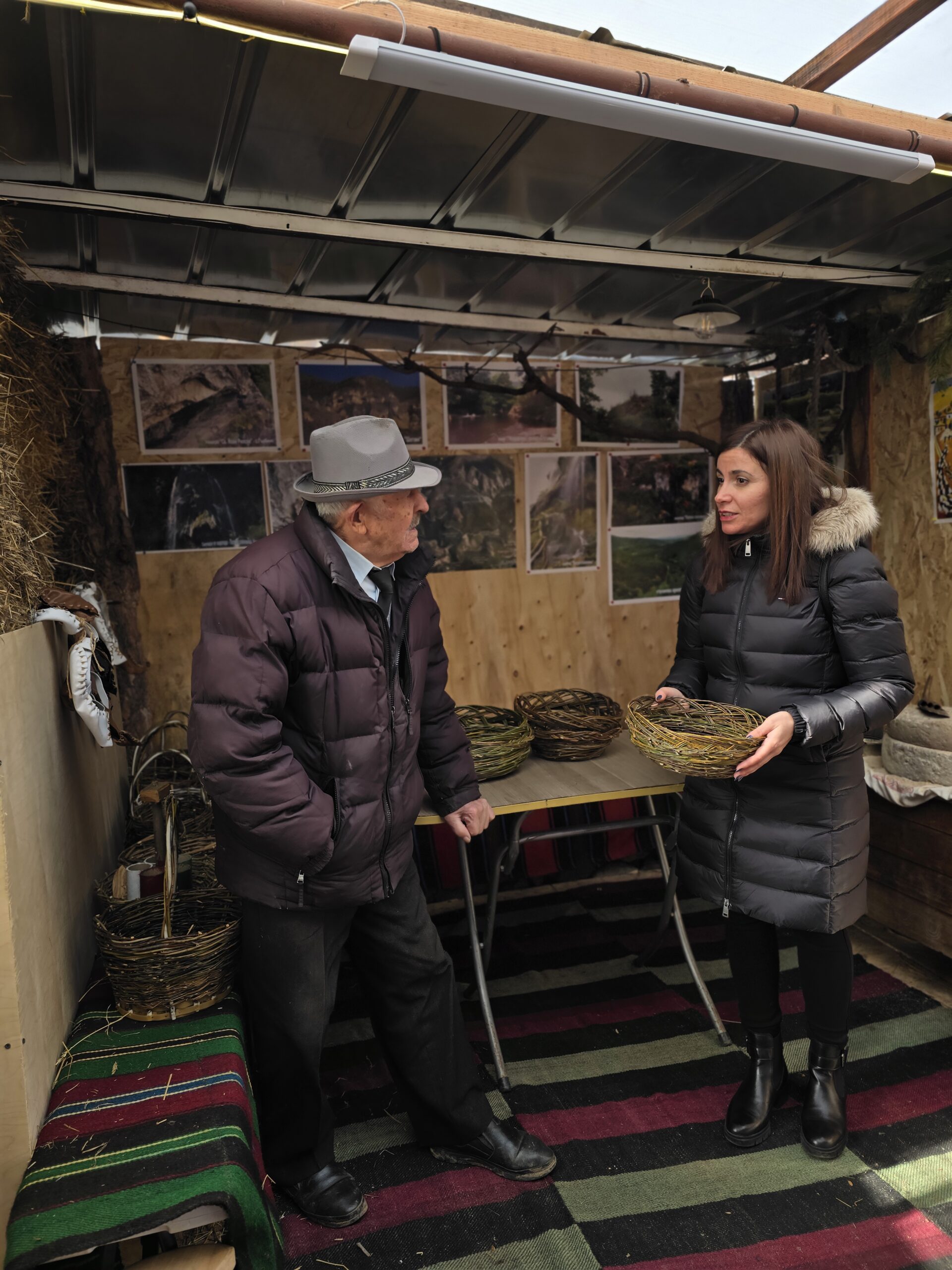
Along the banks of the Struma River, in the Kyustendil region of Bulgaria, 93-year-old Grandpa Dimcho still gathers willow and cornel branches to weave baskets by hand.
He learned the craft as a child and continues to work using only materials provided by nature. No plastic. No industrial production. Just traditional knowledge shaped by generations of interaction with the river landscape.
His story reveals how cultural practices depend on healthy ecosystems. If rivers degrade and wetlands disappear, the knowledge associated with them often disappears as well.
Traditional crafts are not only expressions of heritage. They are living examples of sustainable relationships between people and nature.
Italy: the lagoon and the bottarga
In the Gulf of Oristano, Sardinia, Daniele Colombu leads the cooperative managing the Marceddì lagoon.
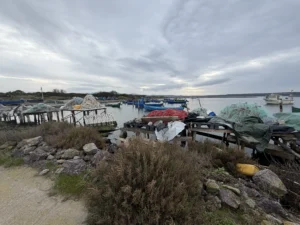
For Daniele, fishing is much more than a profession. It is a responsibility towards a landscape that has sustained local communities for generations.
The lagoon is home to one of Sardinia’s most iconic products: grey mullet bottarga. But bottarga exists only because the lagoon remains alive and productive.
Today, climate change is altering water flows, salinity patterns and seasonal rhythms. Species behave differently. Storms are becoming more unpredictable. Conditions that once seemed stable now require constant adaptation.
The future of this cultural and economic heritage depends on the future of the lagoon itself.
Greece: buffaloes, wetlands and stewardship
At Lake Kerkini, in northern Greece, wetlands shape both landscapes and livelihoods.
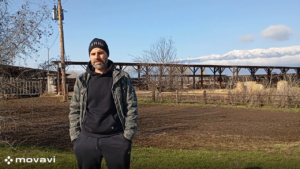
Tryfonas, a buffalo breeder and president of the Greek buffalo breeders cooperative, continues a tradition inherited from his father, grandfather and great-grandfather.
His animals graze on wetland vegetation and cool themselves in the lake during the hot summer months. Their presence contributes to maintaining habitats and supporting ecological balance.
For generations, buffalo breeding has been part of the wetland system itself.
Today, however, changing climatic conditions are affecting vegetation, water availability and seasonal patterns. The challenges facing wetlands are increasingly becoming challenges for local communities as well.
France: living with the delta
In the Camargue, wetlands are inseparable from local identity.
Julien Bourjaillat manages more than 300 bulls and dozens of horses across landscapes shaped by seasonal flooding, salinity and water movements.
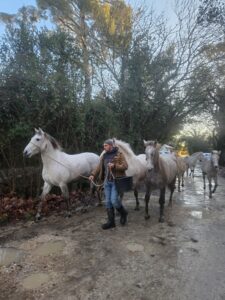
Here, grazing is not simply an agricultural activity. It is a form of landscape management that helps maintain open habitats and supports biodiversity.
The cultural traditions associated with the Camargue—from the famous Course Camarguaise to local gastronomy—are deeply rooted in the wetland environment.
Yet the delta is changing. Droughts are becoming more frequent, salinity is increasing and seasonal cycles are less predictable than before.
For local communities, adaptation does not mean preserving the past exactly as it was. It means maintaining the relationship between people and wetlands while responding to new environmental realities.
Spain: rice fields and resilience
In Spain’s Albufera, wetlands support one of the country’s most iconic agricultural traditions: rice cultivation.
Rice farmer Salvador Romero experienced first-hand the devastating effects of the October 2024 DANA storm, which submerged large areas of agricultural land under metres of water.
The event demonstrated both the vulnerability of local communities and the importance of healthy wetland systems.
Rice cultivation in Albufera is much more than an economic activity. It forms the foundation of local identity and culinary traditions, including the world-famous paella.
When wetlands suffer, these traditions become increasingly fragile.
A shared lesson across the Mediterranean
The stories collected through Wetland4Change come from different countries, cultures and landscapes. Yet they all convey the same message: wetlands are living socio-ecological systems where biodiversity, economy, culture and identity coexist.
From basket weaving along the Struma River to buffalo breeding at Lake Kerkini, from Sardinian bottarga to Camargue cattle traditions and Valencian rice cultivation, these practices demonstrate that conservation is not only about protecting species and habitats. It is also about protecting the knowledge, traditions and communities that have evolved alongside wetlands for generations.
As climate change accelerates, safeguarding wetlands becomes increasingly important not only for environmental reasons, but also for preserving the cultural heritage that depends on them.
Because behind every wetland, there are people. And behind every resilient community, there is a healthy ecosystem.