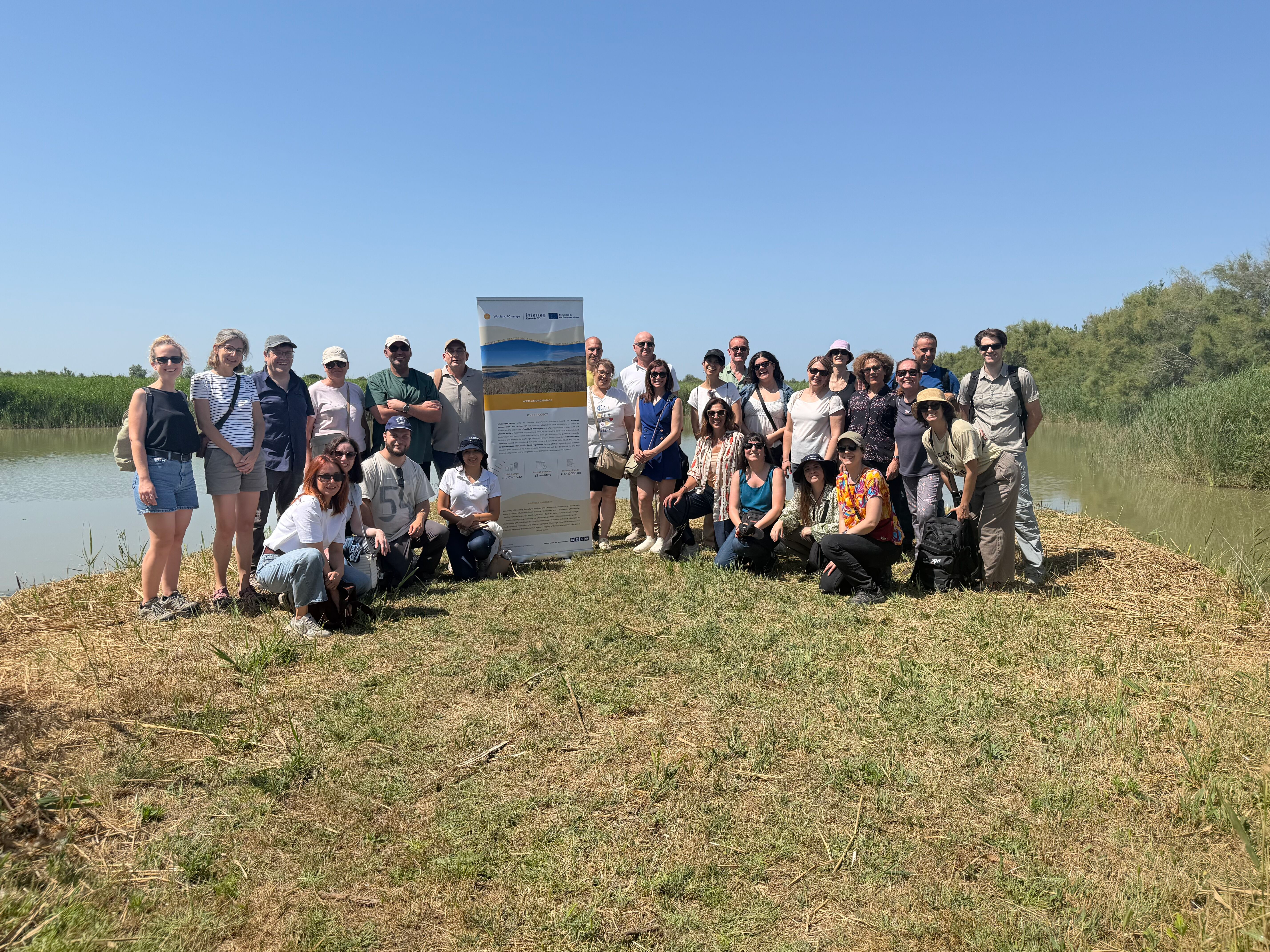
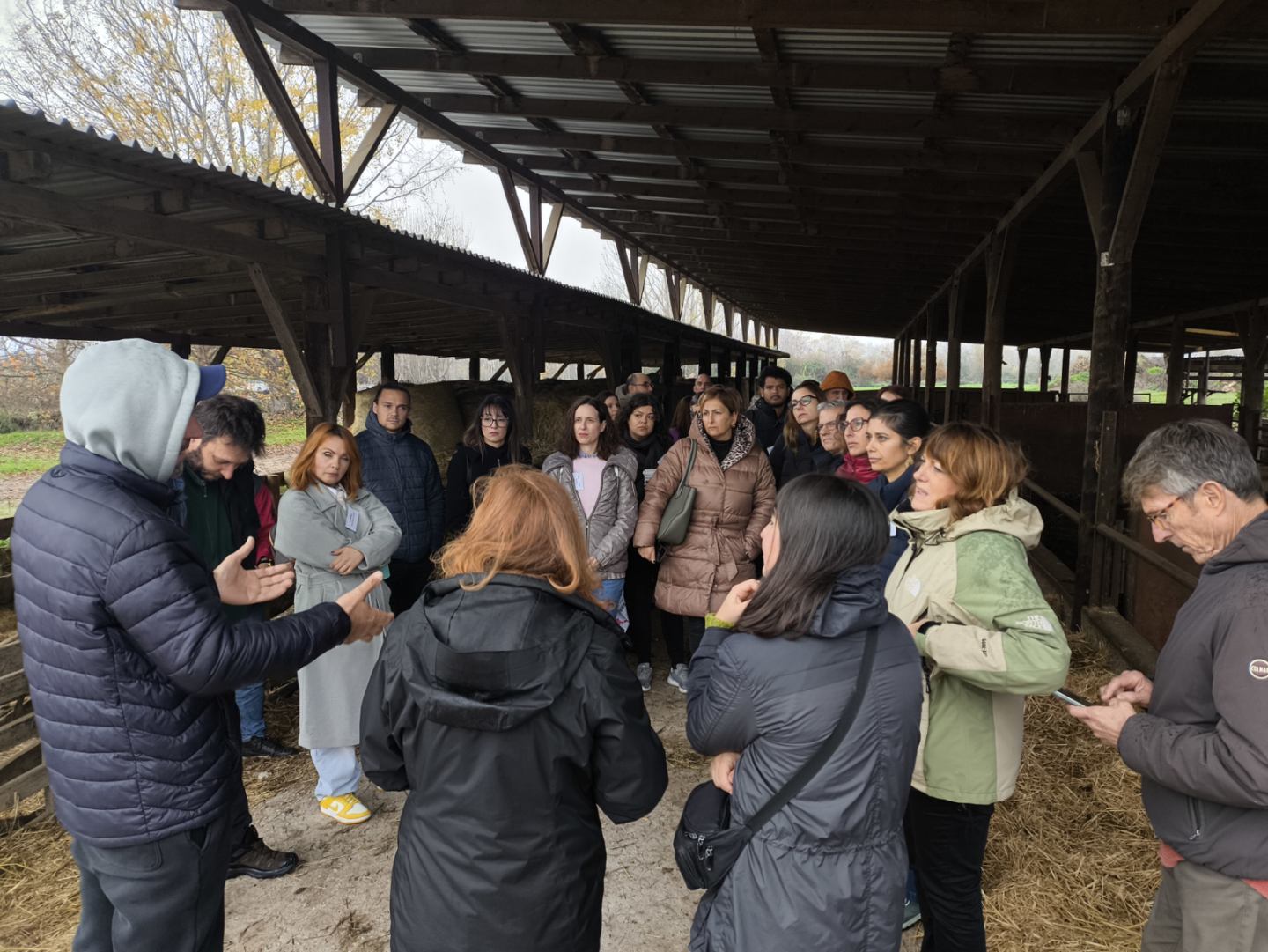
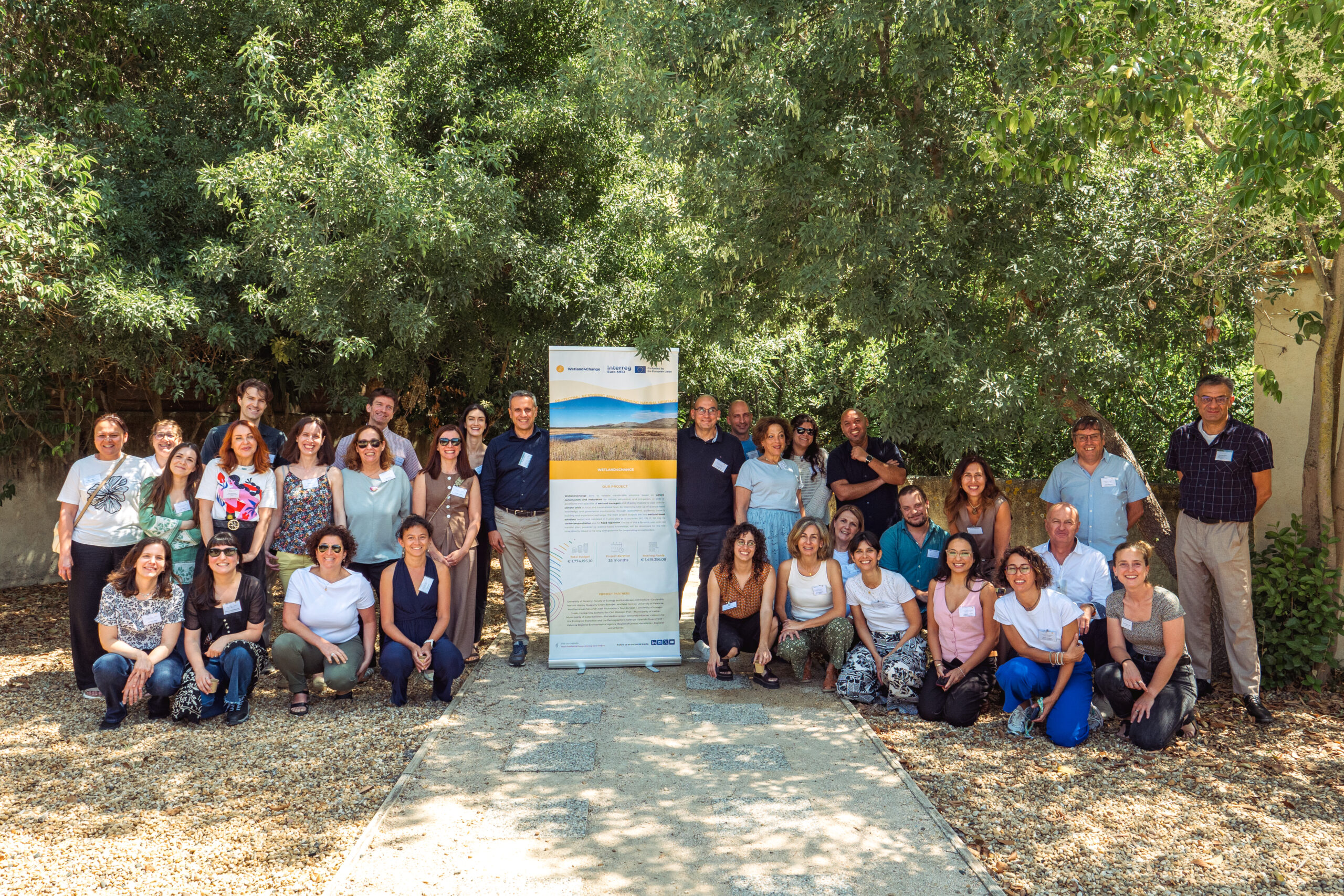
The Wetland4Change consortium closed out its series of living labs with a final two-day gathering in the Camargue, France’s iconic delta wetland and home to project partner Tour du Valat. Partners from all five pilot sites, alongside local stakeholders, came together to take stock of two and a half years of work on two of the project’s central questions: how to measure wetland carbon sequestration, and how to assess and strengthen flood regulation across the Mediterranean.
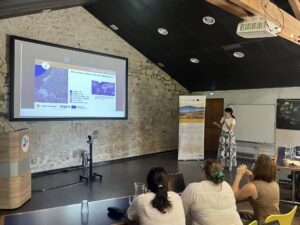
The meeting opened with a welcome from Raphaël Billé, Director of the Programme at Tour du Valat, followed by remarks from Christoph Maier of Interreg Euro-MED, who reflected on the project’s outputs and the transfer phase now underway. Petar Petrov and Stanimira Ivanova of the University of Forestry, Sofia — the project’s lead partner — then opened the technical sessions with an overview of the project and its five pilot sites, before each site team presented its own contribution.
Carbon Sequestration: A More Complex Picture Than Expected
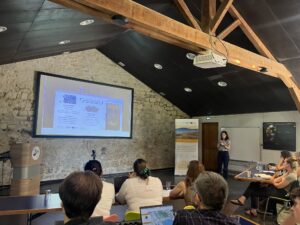
Carlos Rochera of the University of Valencia, who leads the project’s carbon sequestration work package, walked participants through the methodologies developed over the course of the project and the lessons drawn from them. A recurring finding stood out: even within a single wetland, different zones can behave very differently when it comes to carbon sequestration and greenhouse gas emissions. Across all five pilot sites, hydrology emerged as the dominant factor shaping these dynamics — driving vegetation development, organic matter accumulation, and methane production.
That led to a broader takeaway for the consortium: looking at carbon storage in isolation can be misleading. A genuine assessment of a wetland’s climate mitigation potential has to account for both carbon sequestration and greenhouse gas emissions — methane in particular — side by side.
Flood Regulation: Beyond the Wetland’s Edge
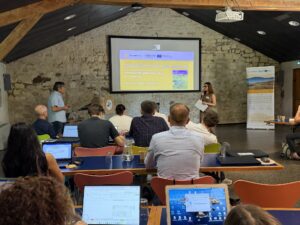
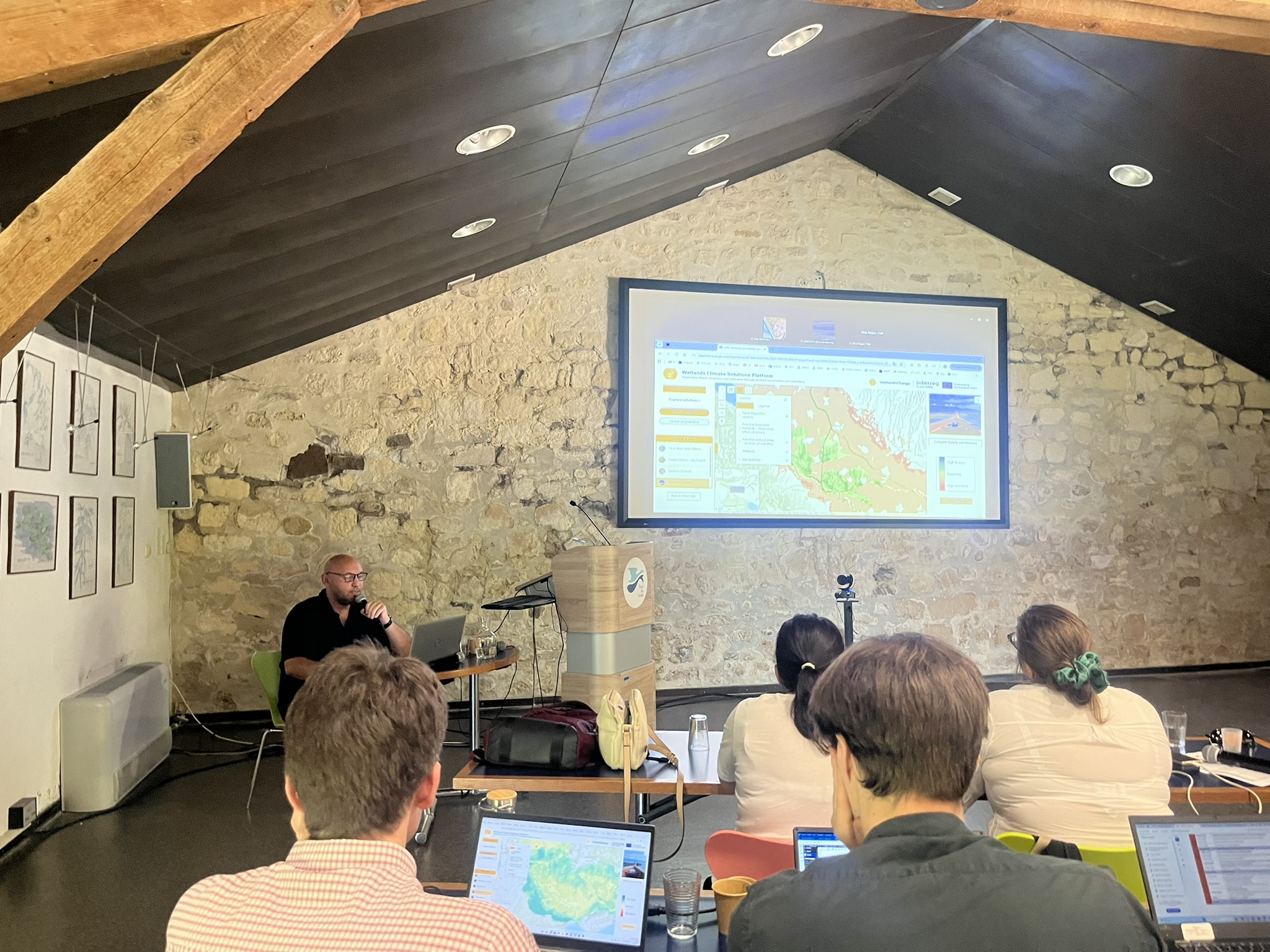
The second half of the technical sessions turned to flood regulation, led by Tour du Valat. The team presented a harmonised methodology — built on Earth Observation, GIS, and spatial modelling — for assessing flood regulation across the five Mediterranean pilot sites. Rather than relying on traditional wetland inventories, the approach maps where ecosystems are currently reducing flood risk, where restoration could deliver the greatest benefit, and how these findings can feed into future planning and climate adaptation.
The lesson that emerged across deltas, lagoons, river floodplains, streams, and lakes was consistent: a wetland’s capacity to regulate floods depends not only on its own condition, but on its connectivity to the surrounding landscape and broader upstream-downstream hydrological dynamics. Wetlands and other hydrologically functional ecosystems can store excess water, slow runoff, and reduce flood peaks downstream — but land-use change, soil sealing, upstream drainage, river canalisation, and habitat fragmentation can all erode that capacity, even where a wetland still looks intact on the surface.
One of the project’s clearer added values lies here: its landscape-scale approach doesn’t just assess what existing wetlands are doing today — it can also reveal flood regulation functions lost to historical degradation, drainage, and land conversion. That makes it a practical tool for identifying where restoration, or even recreation, of wetlands could do the most good at the scale of an entire river basin.
Each pilot site then shared site-specific findings: the University of Forestry presented on Struma (Bulgaria), Ekby on the Strymon catchment (Greece), MEDSEA on the Marceddi case (Italy), and the University of Valencia on the Jucar Basin (Spain).
Stakeholders Weigh In
The afternoon shifted to stakeholder dialogue, structured around two panels.
Panel 1, moderated by Anis Guelmami (Tour du Valat) and featuring Boyanka Spasova (Municipality of Gotse Delchev), Jane da Mosto (We Are Venice), Elli Kizlari (Municipality of Irakleia), and Teresa Muela Tudela (FAMP, Andalusian government), focused on the suitability of Wetland4Change’s outputs for uptake at local management level — and what would need to change to make adoption easier.
Panel 2, moderated by Dania Abdul Malek (ETC-UMA) with Marko Prem (PAP/RAC), Chris Rostron (MedWet), Christoph Maier (Interreg Euro-MED), and Francesca Dettori (Autonomous Region of Sardinia), looked further up the scale — discussing how the project’s results could be adapted to basin, national, and pan-Mediterranean policy contexts, including their relevance to the implementation of the Barcelona Convention.
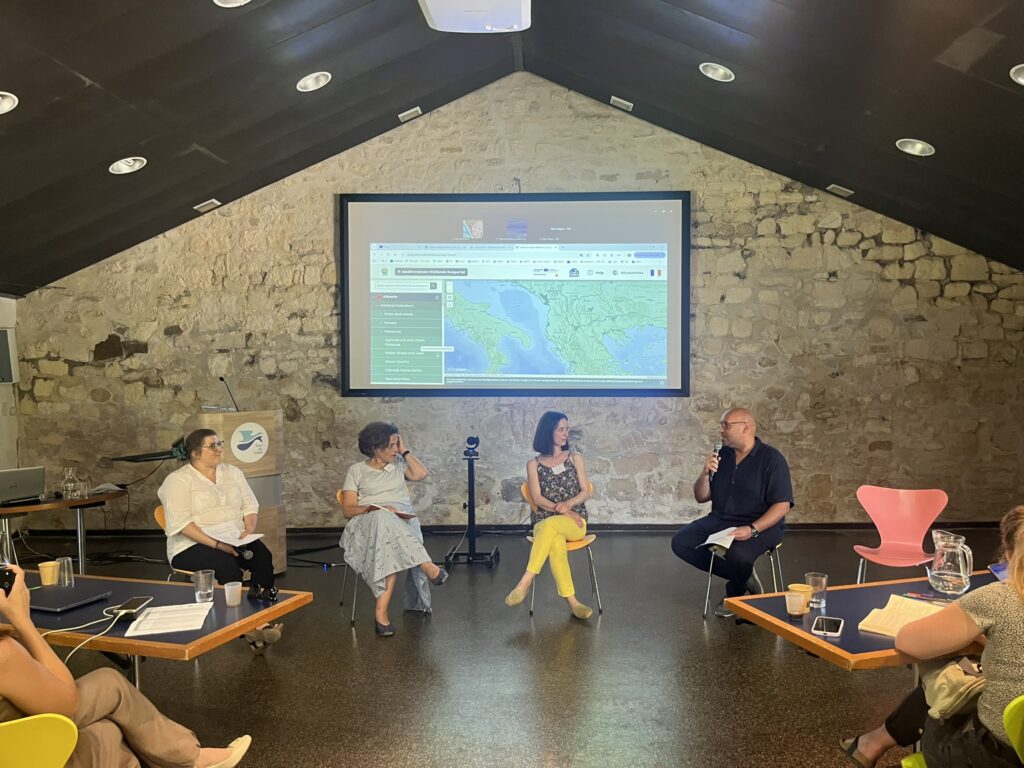
Panel 1 with moderated by Anis Guelmami with : Elli Kizlari, Jane da Mosto, Boyanka Spasova (right to left)
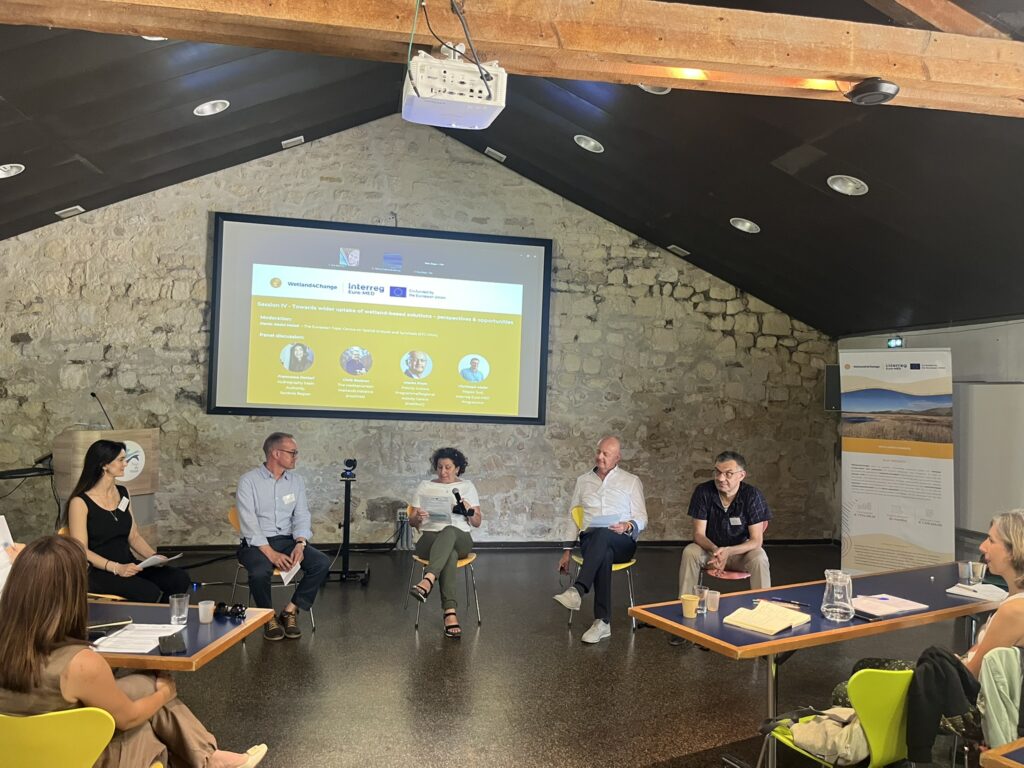
Panel 2 Moderated by Dania Abdul Malek with : Christoph Maier, Marko Prem, Chris Roston and Francesca Dettoric (right to left)
On the Ground
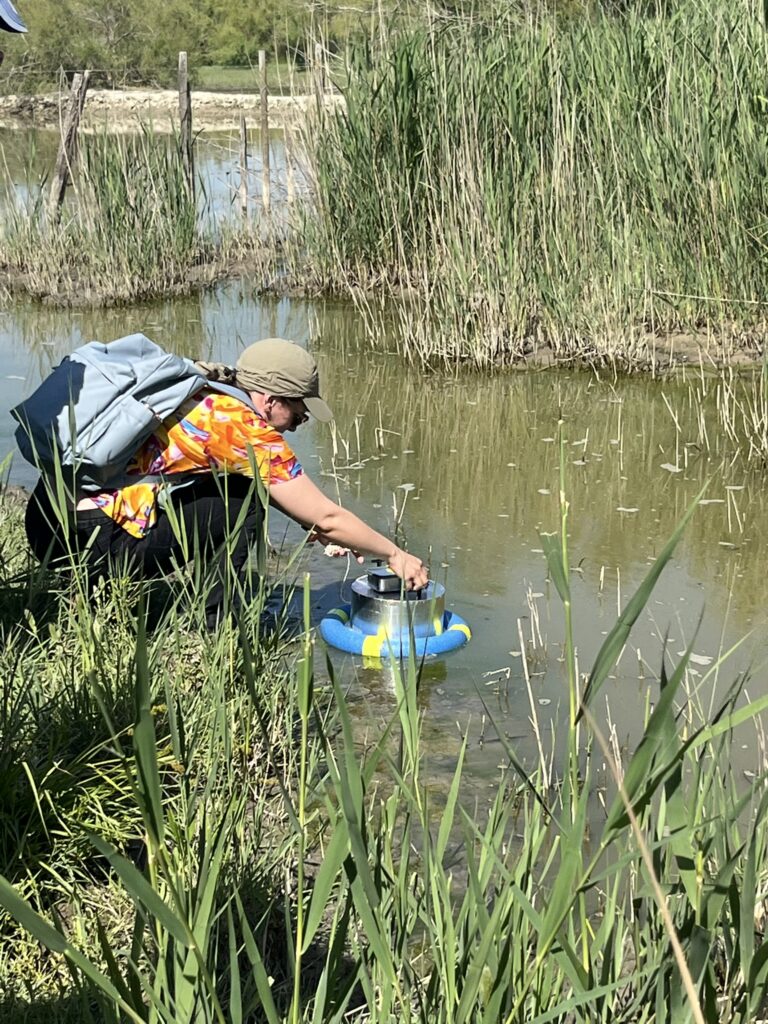
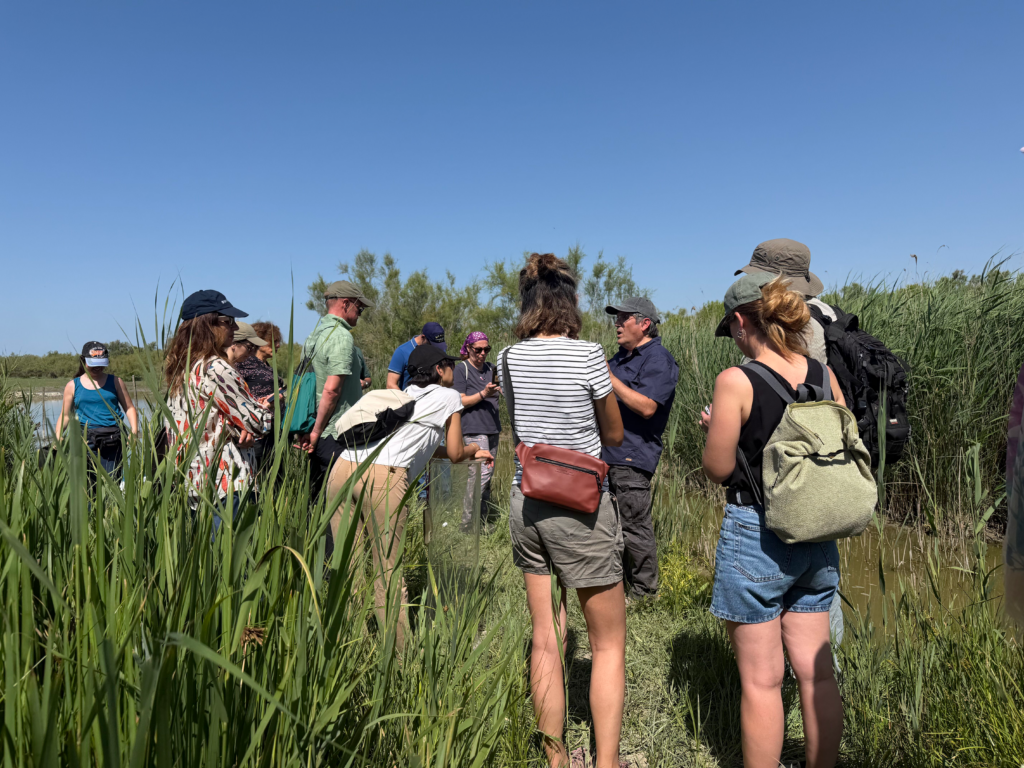
The second day moved from discussion to demonstration, with a field visit to the Verdier marshes where stakeholders could see greenhouse gas measurement techniques carried out in situ — a fitting close to a project phase focused on turning methodology into practice.