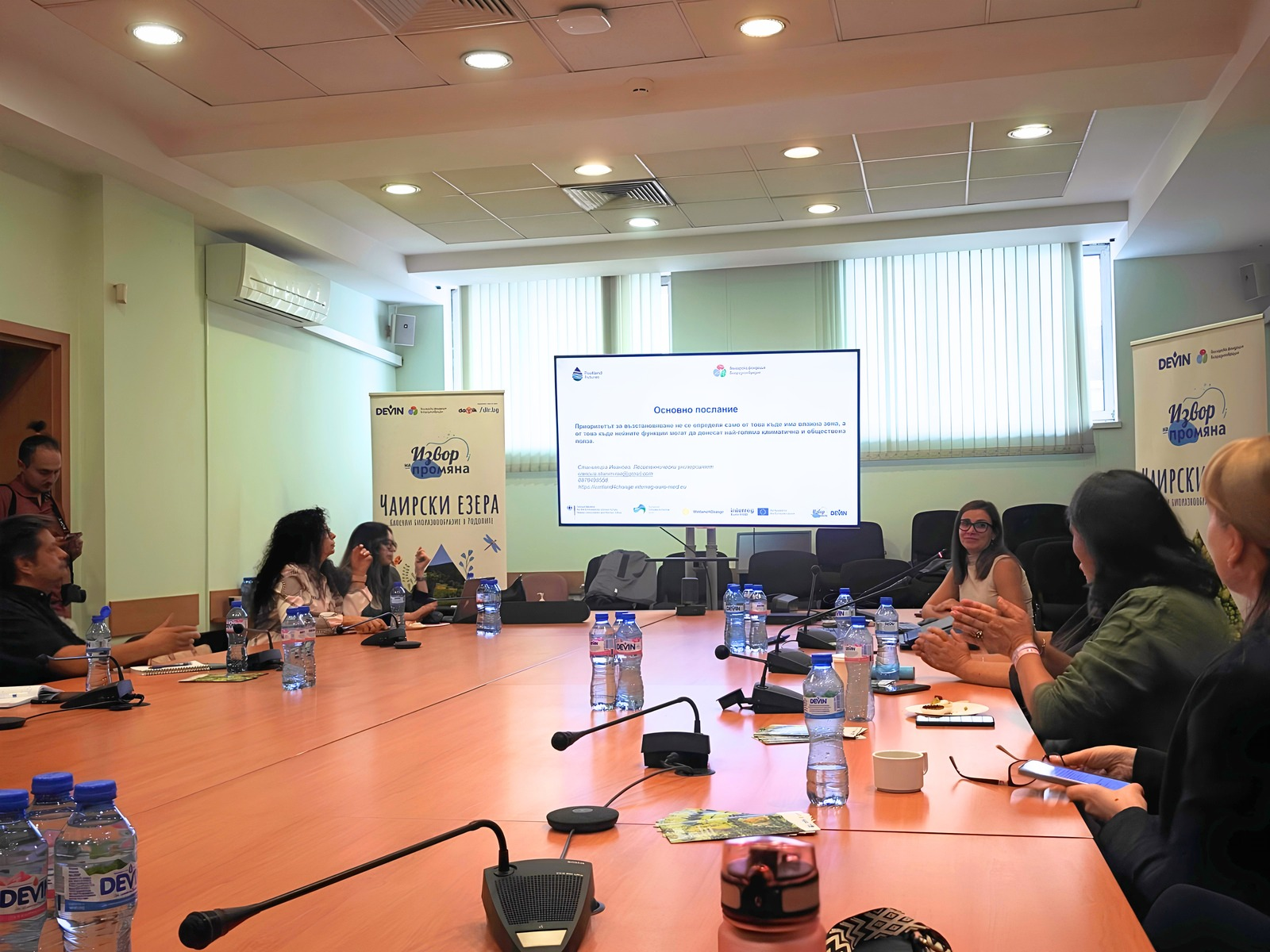
On 24 September 2026, the Wetland4Change project was presented at the National Round Table on the Conservation and Restoration of Peatlands and Peat-forming Wetlands in Bulgaria, organised by the Bulgarian Ministry of Environment and Water in Sofia.
The event brought together researchers, practitioners, public authorities and other stakeholders to exchange knowledge and experience on the conservation and restoration of peatlands and peat-forming wetlands in Bulgaria, while discussin priorities and approaches for their long-term protection and management.
Stanimira Ivanova, from the University of Forestry in Sofia, Lead Partner of Wetland4Change, represented the project during the event. Her presentation, “Prioritising wetlands for restoration based on the ecosystem services they provide for carbon sequestration and storage and flood regulation” introduced the Wetland4Change approach and its tested and validated methodologies for assessing the contribution of wetlands to climate mitigation and adaptation.
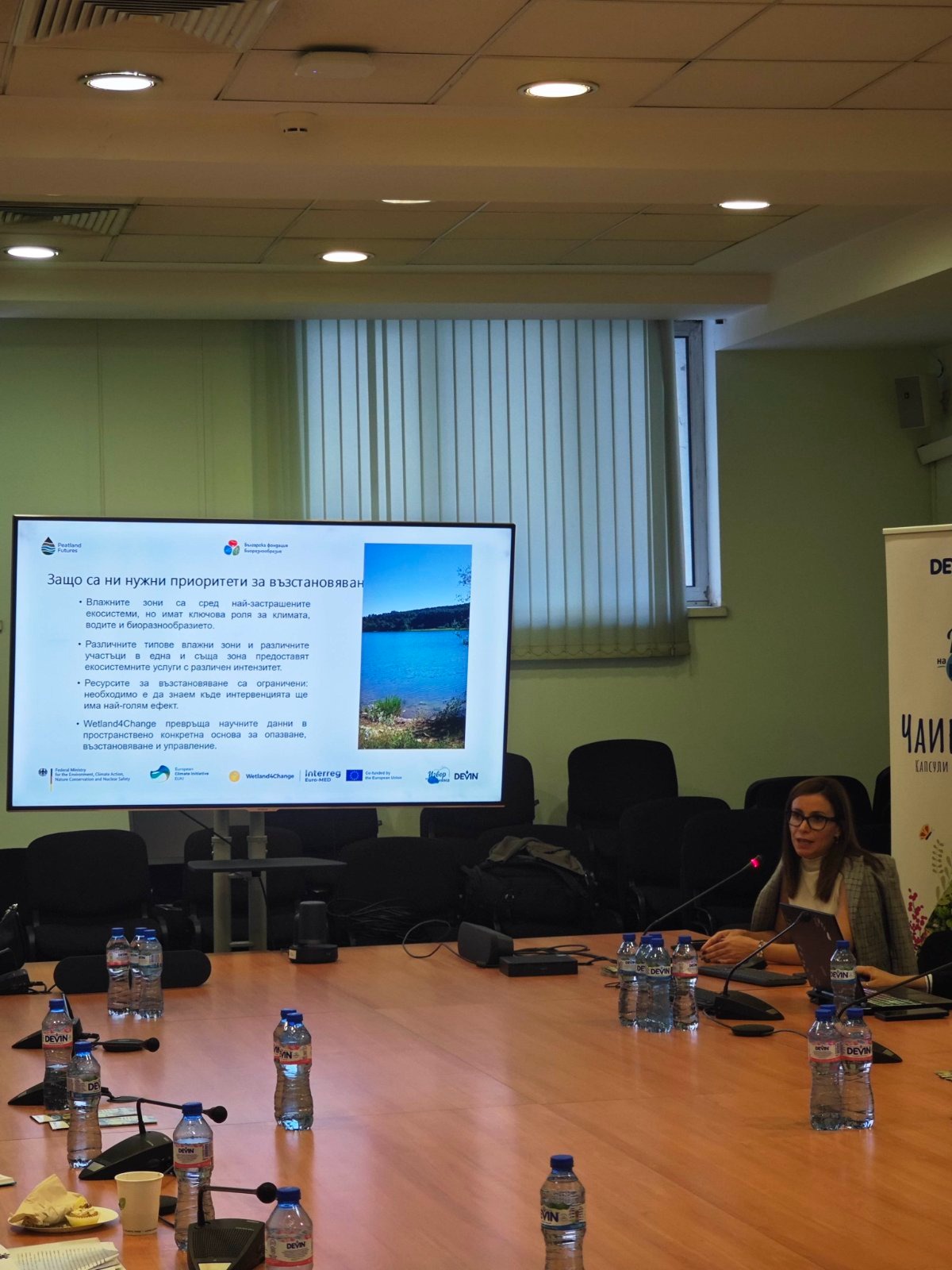
From ecosystem services to restoration priorities
The presentation highlighted how these ecosystem services can be incorporated into restoration planning to help identify and prioritise wetlands where restoration and improved management could provide significant benefits.
Particular attention was given to the importance of combining wetland typology, carbon-related functions and flood-regulation capacity when establishing restoration priorities. This integrated approach can provide a stronger evidence base for decision-making, helping practitioners and authorities move from understanding the functions of wetlands to identifying where restoration efforts can have the greatest potential impact.
Connecting project results with the national dialogue
The round table also offered an opportunity to connect the results and experience developed through Wetland4Change with the ongoing national discussion on peatlands and peat-forming wetlands in Bulgaria.
By bringing project-based evidence and tested methodologies into a national forum, the event contributed to the exchange between scientific research, practical restoration experience and institutional decision-making. It also highlighted the relevance of ecosystem-based approaches for supporting future conservation and restoration priorities.
As Wetland4Change moves beyond its initial testing phase and towards the transfer and wider uptake of its methodologies, opportunities to connect with national and regional stakeholders remain essential for translating project results into practical applications for wetland management and climate resilience.